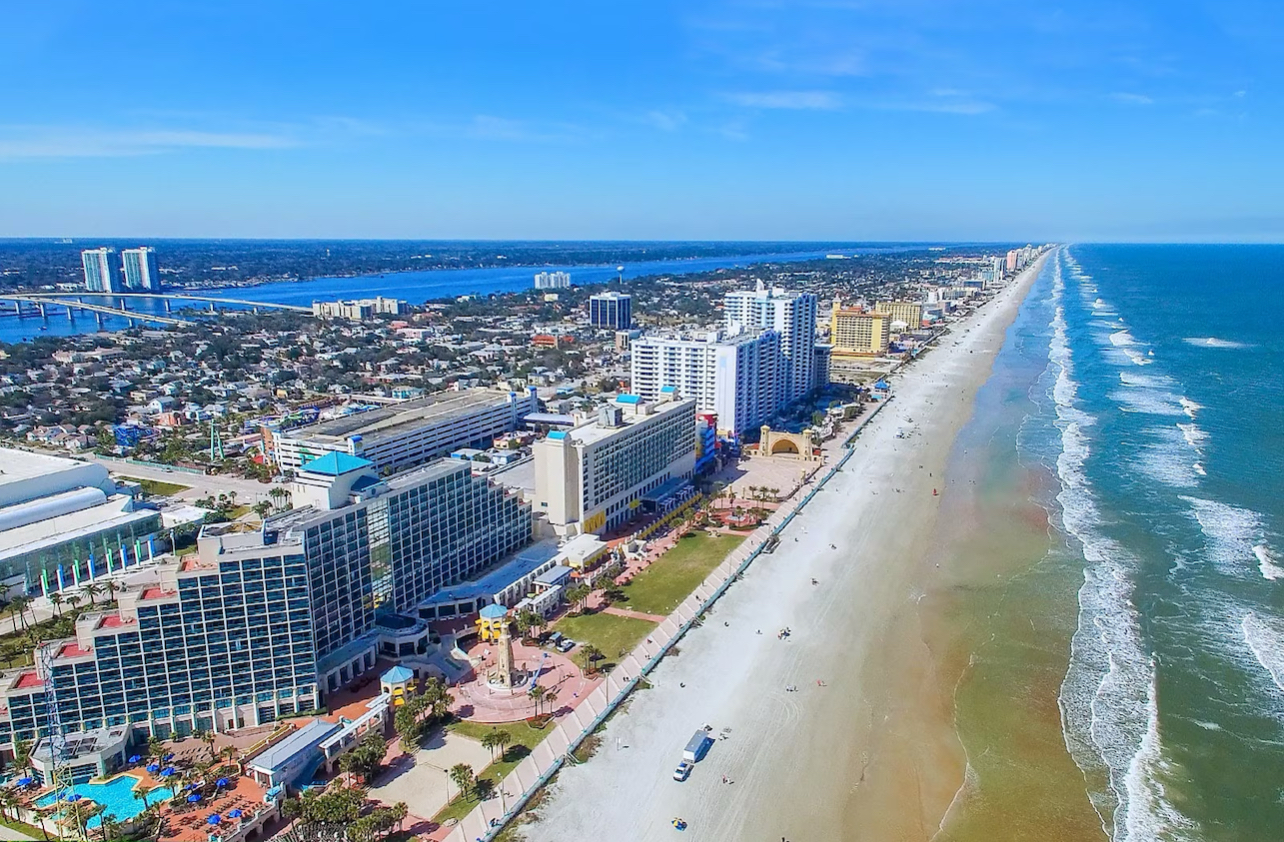
Basketball Prep Schools in the Florida Panhandle
Most basketball families in Northwest Florida already know the challenge: the talent is here, but the development infrastructure isn’t as visible as it is in South Florida or central Florida. Families near Pensacola, Fort Walton Beach, Destin, and Panama City Beach often end up driving hours for elite training, or researching programs hundreds of miles away, because they don’t know what’s available closer to home.
This post is for those families. We’ll cover what to look for in a basketball prep school, what’s available in the Florida Panhandle region, and why the Emerald Coast may actually have structural advantages for player development that families haven’t considered.
The Basketball Landscape in Northwest Florida
The Florida Panhandle produces basketball talent. It always has. Players from this region have gone on to compete at D1 programs and professionally. But the development ecosystem here has historically been fragmented — strong high school programs in places like Pensacola, Fort Walton Beach, and Panama City Beach, but limited access to the kind of structured, year-round prep environment that turns a talented high school player into a legitimate college prospect.
Families who want elite development for their sons have traditionally faced a choice: stay local and piece together development through club basketball and individual training, or relocate to a program in central or South Florida.
A third option has emerged, and it’s right here on the Emerald Coast.
What Is a Basketball Prep School?
Before evaluating options, it helps to understand what a basketball prep school actually is — and how it differs from a high school with a good basketball program, a club team, or a training academy.
A basketball prep school combines structured academics with a high-level competitive basketball program. Players are enrolled as students, completing coursework toward a diploma or post-graduate certificate while training in an environment designed to accelerate their development as athletes.
The core value proposition is this: a focused year (or two) in a dedicated development environment does more for a player’s college prospects than four years of high school basketball at most traditional programs. College coaches understand this. They recruit from prep schools specifically because they know the competition level and the development philosophy.
For families in the Florida Panhandle, the question isn’t whether prep school development works — the data on D1 placement rates from quality programs is clear. The question is where to find a program that’s accessible, credible, and genuinely built to develop players.
What to Look for in a Florida Panhandle Basketball Prep School
Geography matters, but it’s not the only thing. Here are the factors that separate programs worth considering from programs worth avoiding.
Coaching Staff and Playing Background
The most important factor in player development is who’s doing the coaching. A coach who has played at the D1 level or professionally understands the game differently than a coach who hasn’t. They know what college programs look for. They have relationships with those programs. And they can give players feedback that’s grounded in experience, not theory.
At Florida Coastal Prep, our staff includes coaches who have competed at the highest levels. Through The Grind Session, FCP athletes compete alongside and against former NBA Draft Picks in a real competitive league — the highest level of game-speed challenge available to prep players in the country. That’s not a showcase. That’s a league, and our players are in it.
Facility and Training Infrastructure
Not all training environments are created equal. The question isn’t whether a program has a gym — it’s what that gym can do for a player’s development.
FCP’s Spartan Training Center is a 14,000 sq ft indoor facility with NBA-dimension hardwood (94×50 ft), shot clocks, a video board, two Shoot-Away shooting guns, a 60 ft turf training zone, and 24/7 availability. Players have access to a professional training environment at any hour — the kind of facility that supports the early-morning and late-night work sessions that separate developing players from players who are already developed.
Academic Infrastructure
D1 eligibility requires meeting specific GPA and course requirements set by the NCAA Eligibility Center. Programs that treat academics as an afterthought are programs that produce players who run out of eligibility before they run out of potential.
Ask any program you’re considering: what percentage of your players are cleared by the NCAA Eligibility Center? What does your academic support look like? What happens when a player is struggling in a class?
The answers to those questions will tell you more about the program than any highlight reel.
Competition Level
Development requires appropriate challenge. If a player is the best player in every practice session, he’s not being pushed to grow. Programs that compete in quality schedules, that bring in elite training partners, and that structure practice to simulate game pressure — those programs produce results.
Post-Graduate and Transitional Options
Some players aren’t quite ready for college basketball when they finish their high school eligibility. A post-graduate year in the right environment — with the right coaching, the right competition, and the right academic focus — can bridge that gap and open doors that would otherwise have closed.
FCP’s post-graduate program is specifically designed for this. Players who need one more year of development, who transferred late and lost eligibility time, or who want to strengthen both their basketball and academic profiles before committing to a college program.
Why Fort Walton Beach Works for Player Development
Families who haven’t lived in Fort Walton Beach might not immediately see the advantages. Here’s what they see once they’ve been through the process.
A professional facility with no scheduling competition. The Spartan Training Center is FCP’s — not a shared facility, not a rented gym, not a school court that doubles as an assembly hall. When 24/7 access means 24/7 access, motivated players use it. That training volume compounds over a season.
Military community culture. Fort Walton Beach sits adjacent to Eglin Air Force Base and Hurlburt Field. The military families in this community have a relationship with discipline, early mornings, and doing the work without waiting for motivation that influences the culture of institutions here. That’s not a small thing. The athletes who train best are the ones who’ve internalized those habits.
Lower noise, higher attention. The concentration of basketball programs in South Florida creates a specific kind of competition for attention — players spending as much energy being seen as they spend developing. In Fort Walton Beach, the focus is different. Players get more direct coaching attention, more quality reps, and fewer distractions.
Regional airport access. Families often assume remote location means inaccessible. VPS (Destin-Fort Walton Beach Airport), PNS (Pensacola International), and ECP (Northwest Florida Beaches International in Panama City Beach) all serve the area with regular connections to major hubs. Getting to Fort Walton Beach is easier than most families expect.
What Families Who’ve Done This Say
Andrej Zelenbaba, a parent whose son trained with Coach DeForest, put it directly: “He knows how to approach each kid and get a maximum of them. He is a role model for wherever he coaches. I highly recommend!”
James McCravy, another parent, said: “By selecting him, you have secured a giant of a coach who understands how to teach the boys life skills as he teaches them basketball.”
And from Shawn Roy, whose son came to FCP with zero college offers: “My son had zero offers coming out high school, and after completing his time at FCP, he had plenty of offers. Thank you Coach and FCP!!!”
You can read more on our testimonials page.
Connecting Panhandle Talent to D1 Programs
One of the consistent challenges for players from the Florida Panhandle is visibility. College coaches who are already recruiting in South Florida and central Florida sometimes don’t make the trip to the northwest corner of the state. This isn’t a talent issue — it’s a logistics and exposure issue.
Quality prep programs solve this by bringing the competition to the player, and the player to the competition. Tournament schedules that put Panhandle players in front of coaches. Film distribution that reaches college programs directly. Relationships between coaching staffs that result in phone calls and official visits.
At FCP, our recruiting support is built around this reality. We know that our location isn’t a liability if we’re doing the work to connect our players to the programs that should see them. Our coaching staff has those relationships. Our players compete in environments where those coaches are watching.
Is a Florida Panhandle Prep Program Right for Your Son?
The right answer depends on your son’s specific situation.
If he’s a nationally ranked prospect who already has heavy D1 interest, he may benefit from a program with a higher national profile — and we’ll tell you that honestly.
If he’s a talented player who needs a focused development environment, a stronger academic profile, and more consistent competition at a high level — a program like FCP on the Florida Panhandle may be exactly what he needs. We offer both a high school program and a post-grad track to fit each player’s timeline.
The best way to find out is to come see it. Visit the facility. Watch a practice. Meet the coaches. Ask the questions on this list and see how they’re answered.
Families from Pensacola, Fort Walton Beach, Destin, Niceville, Crestview, and Panama City Beach have access to an elite development option that most recruiting guides haven’t caught up to yet. The families who find it first have an advantage.
Interested in learning more about Florida Coastal Prep? Contact our recruiting staff to schedule a visit or apply now to get started. We’ll tell you directly what we can offer and whether it’s the right fit for your son’s situation.
Looking for college basketball programs? Browse our directory of 1,900+ programs across D1, D2, D3, NAIA, and JUCO — with coach contacts and recruiting info.