Junior college basketball is one of the most direct pathways to a Division I scholarship that most families never fully understand until a player needs it. JUCO programs — two-year colleges competing under the NJCAA, CCCAA, or NWAC — operate outside the NCAA recruiting clock. That means coaches can sign players year-round, bring in athletes who need to rebuild their academics, and develop talent that slipped through the D1 recruiting cycle the first time. For the right player at the right time, a JUCO year does not close doors. It opens them.
This guide covers what separates good programs from exceptional ones, the conferences that produce the most D1 transfers, specific programs with strong placement track records, and how a post-grad year factors into the process.
What Makes a JUCO Basketball Program “Best”
Not every JUCO program produces D1 transfers. The difference between a program that launches careers and one that stalls them comes down to five factors:
Coaching quality. The head coach’s relationship network matters more at JUCO level than at almost any other. JUCO coaches who have placed players at D1 programs before will place players again — because D1 coaches trust them. Ask directly: how many players have transferred to D1 or D2 in the last three seasons? Where did they go?
Transfer rate and placement level. A program that consistently sends 4–6 players per class to four-year programs — D1, D2, and NAIA — is doing its job. Programs that rarely produce transfers are not investing in the recruiting infrastructure to get players seen.
Conference strength. Playing in a competitive JUCO conference forces players to raise their level weekly. D1 coaches watch conference film. Players competing against quality opponents every night build credentials that players in weak schedules cannot.
Facility and training infrastructure. Practice reps in a quality facility translate to measurable development. Game-ready courts, weight rooms, and film review systems matter.
Academic support. JUCO players must be eligible to transfer. Programs with academic advisors who understand NCAA transfer rules — and take them seriously — protect a player’s eligibility window. A JUCO year that compromises D1 eligibility is a wasted year.
Top JUCO Conferences to Know
NJCAA Division I is the highest level of junior college basketball. Programs in NJCAA DI compete against the strongest JUCO talent in the country. The Jayhawk Conference (Kansas), the Mon-Dak Athletic Conference, and the Mid-South Conference each produce consistent D1 transfer pipelines. Players who perform at NJCAA DI level are taken seriously by mid-major and high-major programs.
NJCAA Division II offers a strong development path for players who need a year to rebuild their body, their game, or their transcript before entering the four-year transfer market. Competition is meaningful without the same physical demands as DI, which makes it an effective bridge for late-developing prospects.
CCCAA (California Community College Athletic Association) is one of the most talent-dense junior college systems in the country. California community college rosters include players who were highly recruited out of high school, players with international experience, and former D1 athletes transferring down. The level of play is consistent with NJCAA DI, and the pipeline into Pac-12 and Mountain West programs is well-established.
NWAC (Northwest Athletic Conference) covers Oregon and Washington and has produced notable D1 transfers over the past decade. Competition level is strong, and the geographic concentration of programs makes scouting efficient for West Coast D1 coaches.
Strong JUCO Programs With Proven Pipelines
Coffeyville Community College (Kansas) — One of the most consistently successful JUCO programs in the country. Coffeyville has sent players to major programs across every level of D1 and produces high-level guards at a rate few JUCO programs match.
Northwest Florida State College (Niceville, FL) — FCP’s home-state program and one of the most respected JUCO programs in the Southeast. Northwest Florida State has placed players in the ACC, SEC, and Conference USA. The Raiders play in the Panhandle Athletic Conference and recruit heavily from the Southeast. Players who want to stay in Florida and develop toward a D1 offer have a clear path here.
Iowa Western Community College (Council Bluffs, IA) — Iowa Western has built one of the stronger JUCO programs in the Midwest, with a consistent emphasis on placing players at four-year schools. Their schedule includes regular matchups against NJCAA DI programs from across the country.
South Plains College (Levelland, TX) — South Plains competes in the Western Junior College Athletic Conference and has a long history of producing NBA and D1 players. The Texans have one of the more recognizable JUCO programs nationally and recruit on a national scale.
Vincennes University (Vincennes, IN) — One of the oldest JUCO basketball programs in the country, Vincennes has sent hundreds of players to four-year programs. Their history in the KJCCC and Midwest JUCO landscape is deep, and the coaching staff maintains direct relationships with D1 programs.
Salt Lake Community College (Salt Lake City, UT) — SLCC competes in the Scenic West Athletic Conference and consistently places players in the Mountain West and Western Athletic conferences. Utah’s basketball recruiting culture is strong, and SLCC sits in the middle of it.
Three Rivers College (Poplar Bluff, MO) — Three Rivers has produced notable D1 transfers and competes in the Missouri Community College Athletic Conference. The program has a track record of taking undersized or underscholarshipped prospects and turning them into legitimate four-year targets.
How a Post-Grad Year at FCP Bridges to JUCO Offers
A JUCO offer is not automatic. Players who arrive at JUCO programs underprepared — physically, academically, or in terms of their recruiting profile — often spend their two years without attracting D1 attention. The work happens before you arrive, not after you get there.
Florida Coastal Prep has placed players at JUCO programs across the Southeast and beyond across seven seasons. The post-grad year serves three functions for players targeting JUCO and beyond.
First, it brings the academic record into compliance. NCAA clearance and transfer eligibility require a clean transcript. Our academic team maps every player’s transcript on arrival and builds a plan before the first practice. Players who walk into a JUCO program with a cleared transcript and a rising GPA are taken more seriously by coaches at every level above them.
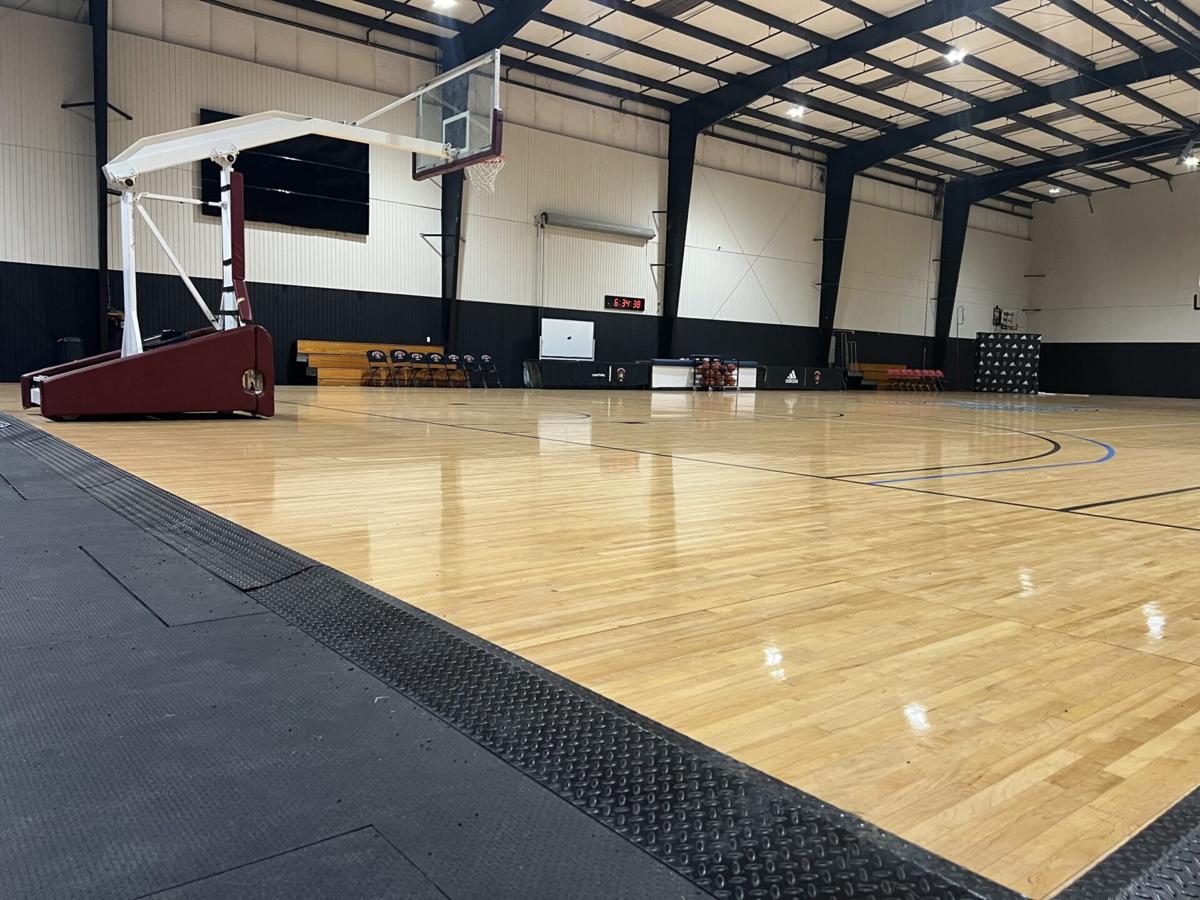
Second, it builds the film portfolio that JUCO coaches evaluate. Our Spartan Training Center — a 14,000 sq ft indoor facility with NBA-dimension hardwood — gives players a competitive game environment every day. We film games and practices in a way that produces recruitable footage, not just highlight reels. JUCO coaches who watch a player compete at the level we play at can make confident evaluations.
Third, it creates direct coaching relationships. Athletic Director Lee DeForest has 25 years of coaching experience at D1, D2, NAIA, and JUCO levels. PG Director Vando Becheli was head coach at Utah State University Eastern for eight seasons with 120+ wins and a Region XVIII championship. When we call a JUCO coach, they take the call. That relationship infrastructure converts interest into offers.
If your target is JUCO basketball — either as an end goal or as a bridge to a four-year program — the post-grad year is where the preparation happens. Explore our post-grad program or browse our college basketball programs directory to identify your specific targets.
Ready to Build Your JUCO Recruiting Plan?
FCP is accepting applications for the 2026–27 roster. Spots are limited to a small, intentional group of players who are serious about earning a college offer. If that is you, apply now or contact our coaching staff to start the conversation.