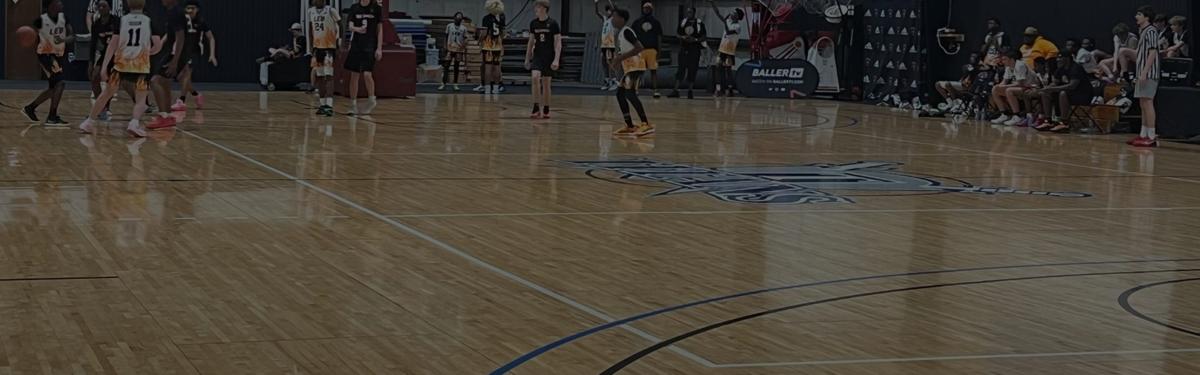
The JUCO pathway gets misread constantly. Families treat it like a consolation prize or a waiting room. Coaches at D1 programs treat NJCAA D1 programs like a second recruiting class every spring. One of those perspectives produces outcomes. The other produces excuses.
Junior college basketball — governed by the NJCAA — offers 525+ programs across three internal divisions. NJCAA Division I competes at a standard that routinely produces players who transfer and start at mid-major D1 programs the following fall. The path is real, it's documented, and it's faster than most players assume.
The Three Divisions Inside JUCO
When people say "JUCO," they usually mean NJCAA Division I. The full structure matters because targeting the right internal level is the difference between generating D1 interest and spending two years competing for a conference title nobody at a four-year program is watching.
- NJCAA Division I: Up to 15 full athletic scholarships per program — covering tuition, room, board, and fees. Programs like Hutchinson CC, Coffeyville Community College, and Northwest Florida State College compete at a level comparable to NCAA mid-majors. This is the tier that feeds D1
- NJCAA Division II: Partial scholarships only — tuition and fees, no room and board. Competition is legitimate but the scholarship ceiling is lower. Best for players who need to establish college grades before a four-year transfer
- NJCAA Division III: No athletic scholarships. Primarily commuter programs for players who want to compete locally while pursuing a degree
Not every NJCAA D1 program feeds four-year coaches. Geography, tournament schedules, and staff relationships determine which programs get D1 evaluators through the door. A player at Hutchinson (Kansas) or Gulf Coast State (Florida) is playing in front of D1 coaches every month. A player at an isolated NJCAA D1 program in a low-traffic region may finish two years without a single D1 coach in the stands.
The D1 Transfer Pipeline — How It Actually Works
Every April and May, D1 coaches move through the NJCAA evaluation calendar. The process is specific: identify a need on next year's roster — a position, a skill set, a height — then find the player who fills it at the JUCO level. These decisions happen fast. A coach with a scholarship to fill and a two-week evaluation window isn't interested in waiting for your high school year to play out.
- D1 coaches attend NJCAA conference tournaments and the NJCAA National Tournament (held in Hutchinson, Kansas) specifically to evaluate transfer targets
- Players who average double figures at an NJCAA D1 program while maintaining academic eligibility generate D1 offers consistently during the April–May evaluation period
- Film from a full season at a competitive NJCAA D1 program is more persuasive than three years of high school highlight tape — coaches can evaluate you against college-level competition rather than projecting from high school data
- Complete a minimum of one full academic year at the JUCO before transferring to protect NCAA eligibility and satisfy transfer residence requirements at most four-year programs
The NCAA Transfer Portal changed JUCO timing. D1 coaches who used to wait until April now enter the transfer portal in November and December to fill needs first. JUCO players who produce early in the season and get their names in front of coaches before the portal closes in January have more leverage than those who wait for the national tournament.
Academic Reset — Why JUCO Fixes What High School Didn't
The JUCO route repairs academic eligibility problems. A player who didn't qualify for NCAA D1 out of high school — because of a GPA below the sliding scale threshold, incomplete core courses, or a standardized test score that didn't clear — can spend one or two years at an NJCAA program and arrive at a four-year school with a college GPA that meets NCAA transfer standards.
- NJCAA programs require a 2.0 GPA to maintain competition eligibility — the same threshold you'll need to satisfy NCAA transfer requirements
- Strong JUCO grades directly improve your NCAA transfer standing. The Eligibility Center evaluates your full academic record including JUCO coursework when determining four-year program eligibility
- Complete core coursework during your JUCO years that satisfies both NJCAA eligibility and NCAA transfer credit requirements — an advisor can map this before you enroll to avoid wasting credits
- Two years at a reputable NJCAA program with clean academics and documented basketball production is a proven, repeatable path to D1 offers that weren't available out of high school
Which JUCO Programs Actually Matter
There are 525+ NJCAA programs. The ones that feed D1 have three things in common: they compete in strong conferences, their schedules include teams that D1 coaches watch on film, and their coaching staffs have personal relationships with D1 assistants who recruit their region.
- Programs with consistent D1 pipelines: Hutchinson CC, Coffeyville CC, Northwest Florida State, Gulf Coast State, Chipola College, South Plains College, Kilgore College, Moberly Area CC — these aren't the only programs that produce D1 transfers, but they're the ones with documented records
- Conference affiliation matters — the Jayhawk Conference, Panhandle Athletic Conference, and Region 8 NJCAA circuits get more evaluation traffic than lower-visibility regional conferences
- Coaching staff background matters as much as location — a head coach who played D1 or coached at D1 has a different network than a coach who came up entirely within the JUCO system
Contacting JUCO Coaches
JUCO coaches operate on a compressed timeline. Roster decisions happen faster than at four-year programs, and coaching staffs are lean — often just a head coach and one assistant. When a position opens, they move immediately.
- Email the head coach directly with your film, graduation year, position, and stats in the subject line
- Mention your GPA and academic status upfront — a JUCO coach filling a roster spot needs to know you can play immediately, not after an eligibility review
- Be specific about why you're targeting their program — conference, location, or transfer success history. Generic "seeking opportunity" emails get deleted
- Target multiple programs simultaneously. JUCO recruiting is faster and less exclusive than D1 — a player who contacts 20 NJCAA D1 programs in a week will generate more responses than one who contacts three D1 programs and waits three months
FCP Knows Which JUCO Programs Actually Feed D1
Not all 525+ NJCAA programs produce D1 transfers. FCP coaches evaluate programs on geography, conference strength, staff relationships, and historical placement records before we make any introduction. We put players in programs that move careers forward.
Apply to FCP Browse JUCO Programs