How to Get a Basketball Scholarship: What Coaches Actually Look For
I have been coaching basketball for over 25 years. In that time I have placed more than 100 players at the college level — D1, D2, D3, NAIA, JUCO, you name it. Parents and players ask me some version of this question constantly: how do you actually get a basketball scholarship?
The honest answer is more complicated than most recruiting websites want to admit. But it is also more encouraging than the numbers alone suggest. Understand what coaches are actually evaluating, put yourself in position to be seen, and a scholarship is achievable for far more players than most people think.
Here is what I know from the coaching side of this process.
The Truth About Basketball Scholarships
Let me give you the reality check first.
According to NCAA research, roughly 3.5% of high school boys basketball players go on to play NCAA basketball at any level. The percentage who earn a full D1 scholarship is closer to 1%. If you are reading this expecting a quick formula that puts you in that 1%, I cannot give you that. No one can.
But here is what those numbers miss: the NCAA is not the only path. The NAIA has over 250 member schools offering athletic scholarships. There are more than 500 JUCO programs across the country. The college basketball programs directory tracks thousands of programs actively looking for players at every level.
When you factor in all four-year programs and two-year programs, the realistic pool for a scholarship is far larger than the D1-only conversation suggests. The players who find opportunities are the ones who understand what each level requires and go after the right fit — not just the most famous logo.
Scholarship Types by Division
Not all scholarships are created equal, and understanding the differences matters when you are building a recruiting strategy.
NCAA Division I
D1 programs are allowed 13 scholarships per roster. These are full athletic scholarships covering tuition, room, board, and books. The competition is intense. Coaches at this level are recruiting nationally and internationally. Most D1 offers go to players who have been on the radar since their freshman or sophomore year of high school.
For a complete breakdown of what D1 programs are looking for, read our D1 basketball scholarship guide.
NCAA Division II
D2 programs are allowed 10 scholarships, but those scholarships are typically split — meaning a program might offer 15 or 18 players partial scholarships that combine to equal those 10 full-ride equivalents. A D2 offer might cover 50 to 80 percent of costs. It is still significant money, and the level of play is genuinely high. Many professional players spent time in D2 before moving up.
NCAA Division III
D3 schools cannot offer athletic scholarships. Full stop. However, D3 schools can and do offer academic scholarships, merit aid, and need-based financial assistance that can make attendance very affordable. The cost conversation at D3 is different from what most families expect.
NAIA
NAIA programs can award up to 11 scholarships per roster. Like D2, these are frequently partial scholarships. The NAIA has programs all over the country, often at smaller private institutions. The level of competition is comparable to D2 in many conferences. NAIA coaches are actively recruiting and are often more accessible than D1 and D2 staff.
JUCO (Junior College)
JUCO programs operate under NJCAA rules and can offer up to 15 scholarships. JUCO is often misunderstood. For players who need more development time, or whose high school academic record makes immediate four-year eligibility uncertain, a JUCO path can set up a D1 or D2 transfer opportunity. Some of the best college players in recent years spent time in JUCO first.
Academic Requirements for a Basketball Scholarship
This is the part most players underestimate until it is too late.
NCAA Eligibility Center
Every player who wants to compete at the NCAA level — D1 or D2 — must register with the NCAA Eligibility Center. This is not optional. You register at eligibilitycenter.org and submit your transcripts so the NCAA can evaluate your core GPA and course history.
The NCAA requires 16 core courses in approved subjects (English, math, science, social science, etc.). These must be completed before you graduate. A course taken at a non-approved school or in a non-approved subject does not count, regardless of the grade.
Core GPA and Test Scores
NCAA D1 requires a minimum 2.3 core GPA combined with qualifying SAT/ACT scores on a sliding scale. The higher your GPA, the lower your required test score, and vice versa. Below a 2.3 core GPA, a player is not eligible for D1 regardless of test scores.
D2 uses a similar sliding scale with a minimum 2.2 core GPA.
NAIA has its own eligibility requirements — generally two of three: a minimum core GPA, a minimum test score, or graduation in the top half of your class. NAIA requirements are slightly more flexible than NCAA in some cases, but they are still non-negotiable.
JUCO eligibility is governed by the NJCAA. Most JUCO programs require only a high school diploma or GED. Academic standards for JUCO participation are less restrictive, which is part of what makes the JUCO path viable for players who struggled academically in high school.
No coach can get you an exception to eligibility rules. If you’re not eligible, the scholarship disappears no matter how good you are. Academic eligibility is not a formality. It is the gate you have to pass through before anything else matters.
What Coaches Actually Evaluate
Most recruiting articles give you a list of stats and measurables. That is part of it. But after 25 years of watching players get recruited and not get recruited, here is what I actually see coaches evaluating.
Film
Film is the first thing most coaches look at when a player gets on their radar. A well-made highlight reel that shows your actual skills in actual game situations is worth more than any email you send or combine you attend.
What coaches want to see in your film: your best moments, yes — but also how you move without the ball, how you handle adversity, whether you play within a system, and whether you look like a player who fits the culture they are building. A 5-minute highlight reel that looks like a mixtape and ignores your role as a teammate will not help you.
For detailed guidance on what to include and how to structure your tape, read our guide on basketball highlight film tips.
Measurables
Every level has benchmarks. At D1, perimeter players are typically expected to be 6’0” or taller, with wingspan, athleticism, and length that match the pace of play at that level. Bigs are usually 6’6” and up.
At D2, NAIA, and JUCO, the standards vary more. A 5’10” guard who can shoot, handle, and defend can absolutely play D2 or NAIA ball. Measurables matter, but they do not disqualify you from every level because you are not 6’4”.
What coaches cannot measure on film: your motor, your coachability, your maturity. Those get evaluated through your reputation in the recruiting community, through conversations with your current coaches, and through visits.
Stats and Competition Level
Stats only mean something in context. Averaging 25 points per night in a weak conference does not impress a D1 coach. Averaging 14 points on an Elite 8 prep school team against national opponents tells a much better story.
Coaches know the circuits. They know which AAU programs are legitimate and which ones just play each other. They know which high school conferences are competitive and which are not. When they look at your stats, they are immediately cross-referencing against the quality of competition you faced.
Coachability and Character
I tell players this all the time: the talent gap between a D1 prospect and a D2 prospect is often smaller than the character gap. Coaches are making a three-to-four year commitment when they offer a scholarship. They are inviting you into their program, their locker room, their culture.
A player who is difficult to coach, who makes excuses, who treats teammates poorly — those things follow you. College coaches talk to each other. They talk to your high school coach, your AAU coach, your prep school coach. The recruiting process is as much a character evaluation as it is a talent evaluation.
Your Recruiting Resume
Your recruiting resume is not a formal document — it is the combination of your film, your academic record, your contact list with coaches, and your reputation in the recruiting community. Building it takes time and intentionality.
The players who get offered scholarships are the ones who are known. Getting known requires getting in front of coaches — through showcases, through direct outreach, through a consistent presence in recruiting events. If coaches do not know you exist, they cannot recruit you.
Read our guide on how to contact college basketball coaches to understand what that outreach should look like and what actually gets a response.
Building Your Recruiting Resume
A strong recruiting resume starts with visibility. You need coaches to see you play — not on a highlight reel alone, but in competitive game situations against good opponents.
AAU and club basketball are the primary scouting grounds at the high school level. The best AAU programs compete on national circuits where college coaches attend specifically to recruit. If you are playing AAU but your program is not at a level where college coaches show up, you are competing without being evaluated.
Showcase events and combines give you direct exposure. These are events specifically designed for players to be seen by college coaches. Attendance is not free, but for a player serious about a scholarship, the investment in the right showcase is worthwhile.
Direct outreach is underused and often done poorly. Most players send generic emails with no subject line, no relevant information, and no clear purpose. A well-crafted email to a coach — with your film link, your academic profile, and a genuine reason why their program is a fit — stands out because most emails do not do that.
Visit coaches in person when possible. An unofficial visit to a campus shows interest and gives you a chance to see if the program is actually a fit for you. Coaches notice when players make the effort.
The Recruiting Timeline: When to Start, When Offers Come
The timeline depends on the level you are targeting.
D1 recruiting starts early. For major D1 programs, legitimate offers often come in the spring and summer before a player’s junior year of high school, and sometimes earlier for elite prospects. If you are waiting for D1 interest and it has not materialized by your senior year, it is time to recalibrate your target level — not give up, but be honest about what the market is telling you.
D2 and NAIA recruiting is more active throughout junior and senior years. Offers at these levels often come later in the process, sometimes even after graduation for players doing a post-grad year.
JUCO recruiting has the most flexible timeline. JUCO programs are often filling rosters as late as August before a season starts.
When should you start? The academic piece starts the moment you enter high school. Your core GPA from freshman year counts. Register with the NCAA Eligibility Center during your sophomore or junior year. Start building film and attending showcases by the end of your sophomore year at the latest.
Waiting until senior year to take recruiting seriously is the single most common mistake I see from talented players who end up without options.
How a Post-Grad Year Increases Your Scholarship Odds
A post-grad year is an additional year of development after high school graduation, played at a prep school program before entering college. It is not a last resort. For the right player, it is the single highest-leverage move available.
Here is why it works.
Physical maturation. An 18-year-old and a 19-year-old are different athletes. A year of elite training, better nutrition, strength and conditioning, and high-level competition accelerates development in ways that another high school season simply cannot.
Recruiting exposure. Post-grad programs play national schedules against top opponents. College coaches attend these games. A player who was overlooked as a high school senior — playing in a weak conference, not on the radar — can completely reset their recruiting profile in a single post-grad year.
Academic cleanup. If a player’s NCAA eligibility is in question because of GPA or test scores, a post-grad year creates time to fix it. Additional coursework, test prep, and academic support can clear the path to eligibility.
Offer timing. Many D2, NAIA, and even D1 programs recruit post-grad players specifically. A post-grad player is a known commodity — college coaches can evaluate a full year of performance in a competitive environment. The uncertainty that comes with recruiting a high school junior is gone.
Brandon Maclin came to FCP as an overlooked forward from Jackson, Tennessee. After his post-grad year under Lee DeForest and Kenny Anderson, he earned a D1 offer, broke out at Odessa College in JUCO, transferred to Radford, and ultimately landed at DePaul University in the Big East — where he surpassed 500 career D1 points and hit a game-winning layup to end DePaul’s 10-year losing streak against Creighton. That is what the post-grad path can do for a player who was not on anyone’s radar as a high school senior.
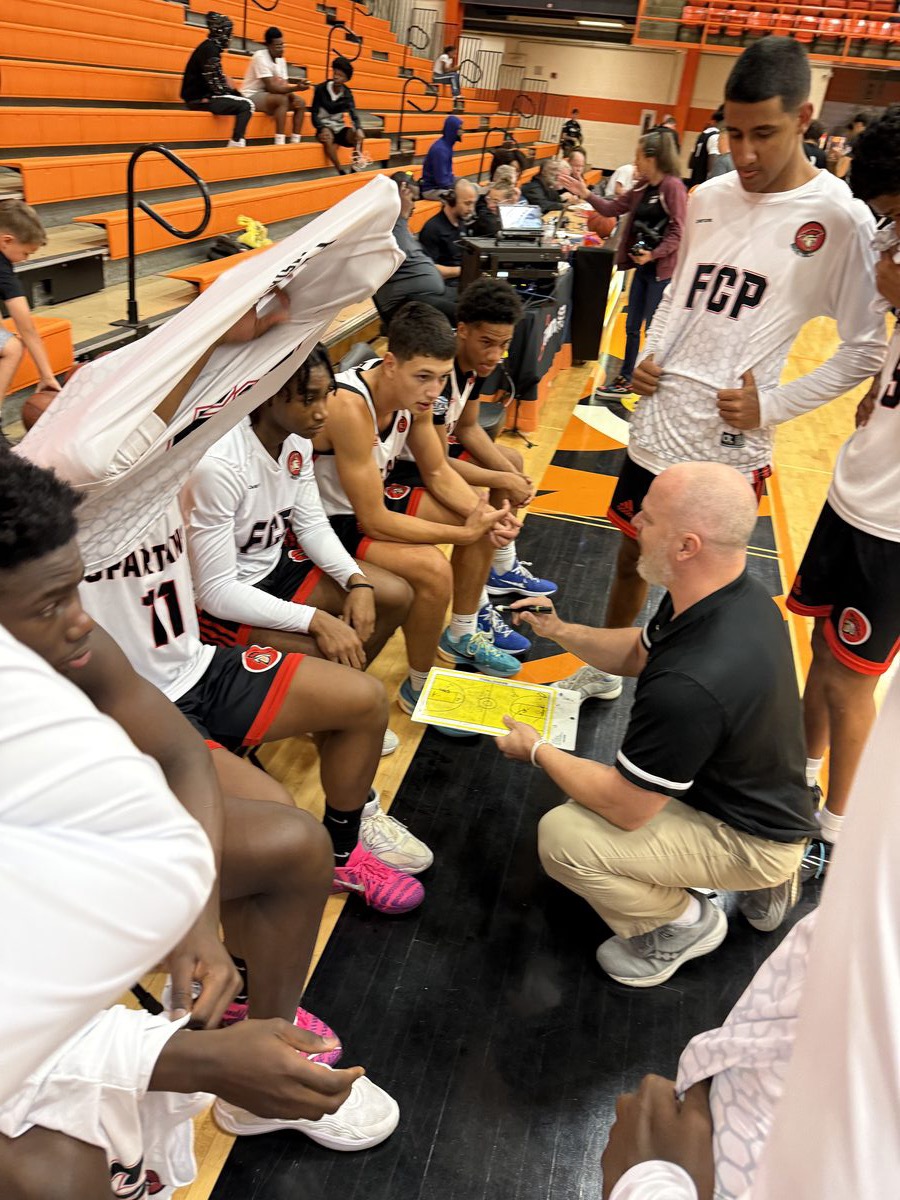
At Florida Coastal Prep, our post-grad program is built specifically for players in this position. We compete on a national schedule, provide academic support, and have a coaching staff with the relationships and track record to connect players with the right programs. If you want to understand whether a post-grad year makes sense for your situation, read why post-grad.
You can also review our academics page to understand the eligibility support we build into the program.
Common Scholarship Myths Debunked
Myth: You have to go D1 or it is not worth it.
This is the belief that kills more recruiting careers than anything else. Players who are chasing D1 and nothing else often end up with no scholarship at all. Meanwhile, D2 and NAIA programs offer real scholarships, real competition, real coaching development, and real degrees. The level of play does not determine the value of the opportunity.
Myth: If you are good enough, coaches will find you.
College coaches have limited time and limited recruiting budgets. They go to the places where they know talent is concentrated. If you are not at those places — the right showcases, the right programs, the competitive circuits — you can be talented and still be invisible. Getting found requires putting yourself in front of people who can evaluate you.
Myth: Your high school coach will handle the recruiting.
Some high school coaches have relationships with college programs. Most do not. Even those who do have limited reach. Do not outsource your recruiting to someone else. Understand the process, manage your own profile, and take ownership of the outreach.
Myth: Social media presence drives recruiting.
Coaches look at social media, but it is not how they recruit players. A clean social media profile is a prerequisite — not having embarrassing content that undermines a recruit’s character evaluation. But viral mixtape clips do not generate scholarship offers. Game film, academic profiles, and direct relationships with coaching staff do.
Myth: Academic struggles disqualify you from all scholarships.
If your academics are genuinely problematic, there are still paths. JUCO does not require the same academic history as four-year programs. NAIA has more flexible standards than NCAA in some cases. And if the issue is GPA from early high school years, a post-grad year with strong academic performance can demonstrate the commitment colleges want to see. The academic situation is fixable in most cases — it just requires honesty about where you are and a real plan to address it.
Myth: The scholarship offer comes before you have to decide the school is a fit.
Players sometimes accept the first offer that arrives because they are afraid nothing else is coming. Take time to evaluate fit — the coaching staff, the academic program, the culture, the geographic environment. You are going to spend three to four years in that place. A scholarship to a program that is a bad fit is not necessarily better than a smaller offer from a program where you will thrive.
The Bottom Line
Getting a basketball scholarship is not about being one of the 1% who earns a D1 full ride. It is about knowing what coaches at every level need, putting yourself in position to be evaluated on those terms, and being honest about where your game and your academics actually stand. Most players aren’t honest about that last part. The ones who are tend to find opportunities.
The players I have watched earn scholarships over 25 years of coaching are not always the most talented players I have coached. They are the ones who took the process seriously, invested in the right opportunities, maintained their grades, put out quality film, reached out to coaches directly, and did not give up when early interest did not come.
If you are in the right program, putting in the work, and approaching recruiting with real intentionality, opportunities will come.
If you want to know whether a post-grad year at Florida Coastal Prep is the right move for your recruiting situation, apply here and we will have an honest conversation about where you are and what we can realistically help you achieve.
Questions? Contact our coaching staff directly.
Looking for college basketball programs? Browse our directory of 1,900+ programs across D1, D2, D3, NAIA, and JUCO — with coach contacts and recruiting info.