Why Older Players Win the Transfer Portal and What to Do
Walk into any Division I or Division II coaching staff meeting in April — the height of transfer portal season — and listen to how coaches talk about prospects. You’ll hear a lot of phrases like “ready now,” “proven producer,” “no development needed,” and “two years of tape.”
What you won’t hear much of is “high ceiling” or “raw talent” or “reminds me of.”
The transfer portal has fundamentally changed the language of college basketball recruiting. And the language coaches are using tells you exactly what the market is rewarding: players who are older, more experienced, and ready to contribute immediately.
Why Coaches Choose Portal Players Over Young Recruits
This isn’t preference — it’s math.
A coaching staff that recruits a 17-year-old prospect is making a bet. They’re betting that the player develops on the timeline they expect, stays healthy, stays academically eligible, and doesn’t transfer when a better offer comes along. That’s four significant variables, none of which they control.
A coaching staff that recruits a 21-year-old transfer is working with data. They have two or three years of college statistics, multiple seasons of game film, physical measurables that have already been tested in a college strength program, and a direct conversation with the previous coaching staff.
One is a gamble. One is an investment with a known return.
In a world where coaches are under immediate pressure to win — where fan bases and athletic directors and NIL collectives measure performance in real time — the risk calculus has shifted dramatically toward the known quantity.
The Scholarship Seat Is Now a Business Decision
Here’s what young players need to understand about how scholarship decisions actually get made in the NIL era.
Every scholarship seat on a roster has a cost. At the D1 level, a full scholarship is worth $30,000–$75,000 per year depending on the institution. Multiply that across a 13-scholarship roster and you’re looking at $400,000 to $1 million in annual expenditure, plus NIL commitments through the collective.
Athletic directors and boosters see those numbers. They expect results. That pressure flows directly to the head coach, who flows it to the staff, who flows it to every recruiting decision.
The question a coach asks when filling a scholarship seat is no longer just “Is this player talented?” It’s “What is this player worth to us right now, and what is the risk that they don’t deliver?”
A transfer with a proven body of work answers that question. A high school recruit, no matter how talented, creates uncertainty.
The Age Advantage Is Real — and Quantifiable
Research on athletic development consistently shows that physical maturation in male athletes typically continues through age 21–23. Strength, reaction time, body composition, and injury resilience all improve meaningfully into early adulthood.
In practical terms: a 20-year-old player arriving at a college program has already gone through most of that development curve. They’re not going to get noticeably bigger or stronger during their college career — they’re already there. They can be deployed at near-full capacity from day one.
A 17-year-old recruit is still in the middle of that curve. They’re physically capable, but they’re not done. Their body is still changing, their strength training is still building a base, their nervous system is still developing the fine motor patterns that separate good players from great ones.
Coaches who need wins now can’t afford to wait for that process to complete. So they buy finished.
What This Means for International and Overseas Professionals
The trend goes beyond the domestic transfer portal. More programs every year are recruiting players who have competed professionally in overseas leagues — FIBA leagues in Europe, the NBL in Australia, leagues in South America and Africa.
These players are 19, 20, 21 years old. They’ve been in professional training environments. They’re physically mature, tactically developed, and have game experience that no college freshman can match.
Several mid-major and high-major programs have made these players the centerpiece of their offseason acquisitions. Some have started immediately. Some have led their teams in scoring.
The message to domestic players is clear: the competition for scholarships isn’t limited by national borders anymore. The market for college basketball talent is global, and it rewards development regardless of where it happened.
The Post-Grad Advantage: How Younger Players Compete
None of this means that 17 and 18-year-old players can’t have college careers. Thousands do every year. But the ones who thrive have something in common: they don’t arrive as projects.
The players who succeed in the NIL era transfer portal landscape are the ones who took their development seriously before college — who put in a real preparation year, added strength, refined their skill set, studied the game, and arrived as a product that a coaching staff could deploy.
That’s the exact purpose of a post-graduate year.
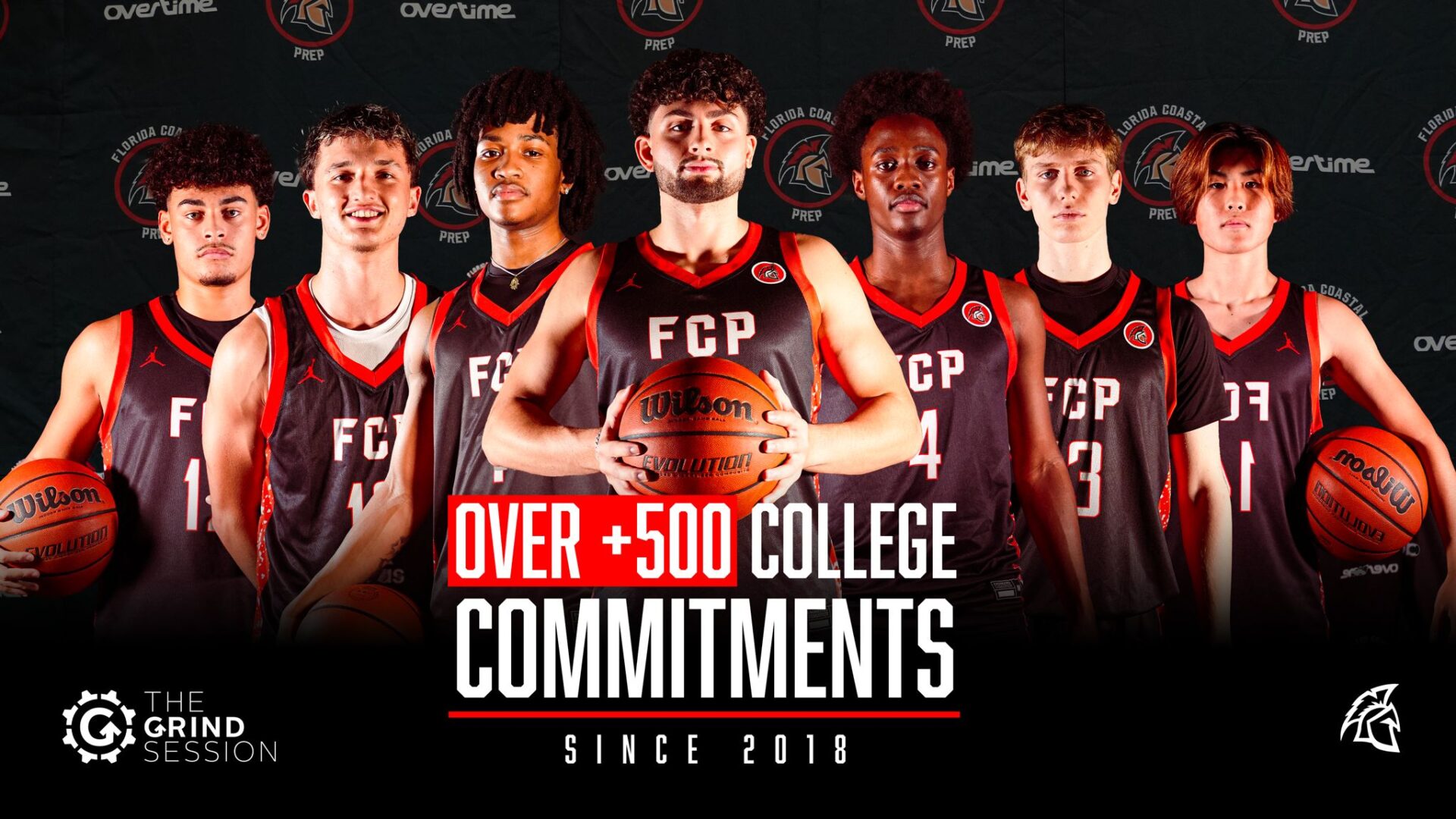
A post-grad year at a program like Florida Coastal Prep compresses the development that might have taken two years of college into one intentional year before college. Players train daily at the Spartan Training Center under coaches with professional and college experience. They play at a high competitive level against other serious players. They study film. They build the physical base.
And then they enter the recruiting market — or the transfer portal, if they’ve already started college and need to reset — as a 19 or 20-year-old with a fully developed body, refined skills, and a year of high-level game tape.
That player looks a lot more like what coaches are shopping for in April.
The Players Who Skip This Step
There’s a category of player that gets stuck. They were good enough to get a scholarship offer right out of high school — maybe D2 or NAIA — and they took it. They arrived young and underprepared. They didn’t produce right away. The staff went to the portal.
Now they’re transferring themselves, at 19, with limited production on their transcript, looking for a second chance. And they’re competing against the same pool of older, more developed players they weren’t ready for the first time.
This is the cycle that a strategic development year breaks.
Building a Career, Not Just Getting an Offer
The players who build lasting careers in this era are thinking differently than the players who don’t.
They’re not asking “How do I get an offer?” They’re asking “How do I become the kind of player that coaches can’t afford not to offer?”
That question leads you toward development. Toward a real training environment. Toward the kind of physical and tactical maturity that makes you a value-add from day one instead of a liability until year three.
The portal rewards that player. The coaches recruiting right now are looking for exactly that.
This is Part 2 of a 3-part series on NIL, the transfer portal, and what it means for player development.
Read Part 1: College Basketball Is Now a Professional Sport. Is Your Player Ready?
Continue to Part 3: Train Like a Pro Before College: The New Standard for Player Development
Want to build the profile that coaches are recruiting? Learn about FCP’s post-grad program or contact us.
Ready to take the next step? Apply to Florida Coastal Prep.
Looking for college basketball programs? Browse our directory of 1,900+ programs across D1, D2, D3, NAIA, and JUCO — with coach contacts and recruiting info.