Best Basketball Prep Schools in Florida 2026
Florida isn’t just a vacation destination — it’s the basketball development capital of the United States. The state’s prep school basketball scene has produced NBA first-overall picks, All-Stars, G-League professionals, and hundreds of Division I college commits over the past decade.
If you’re a high school basketball player — or the parent of one — trying to figure out the best path to college basketball, understanding Florida’s prep school landscape is step one.
This guide breaks down the top programs, the real players they’ve produced, and what it takes to get in.
Why Florida for Prep School Basketball?
Three factors make Florida the epicenter of prep school hoops:
-
Year-round training weather — No snow days, no indoor-only winters. Players train outdoors and in elite facilities 365 days a year.
-
National tournament circuits — Florida hosts major exposure events including the Grind Session, the National Prep School Invitational, and dozens of college showcase tournaments that draw scouts from every Division I conference.
-
Proximity to college programs — Florida is home to SEC, ACC, AAC, ASUN, and Sun Belt conference schools, and every major program sends recruiters through the state regularly.
The result? Florida’s prep schools have become the go-to development pipeline for players who need an extra year of growth between high school and college.
What Are Basketball Prep Schools?
Basketball prep schools are full-time residential or day programs where student-athletes train, compete, and take classes together — specifically designed to develop players for college recruitment. Unlike AAU basketball (a travel circuit), prep school basketball is a year-round commitment: players live in or near the facility, practice daily, play a national schedule, and receive academic support alongside their athletic development.
The best basketball prep schools share three traits: elite coaching with professional or high-level college experience, a competitive national schedule that puts players in front of college scouts, and a track record of real college placements — not just highlight reels.
Florida is home to several of the top basketball prep schools in the country. Here’s how the major programs compare.
Top Basketball Prep Schools in Florida
Florida Coastal Prep (Fort Walton Beach)
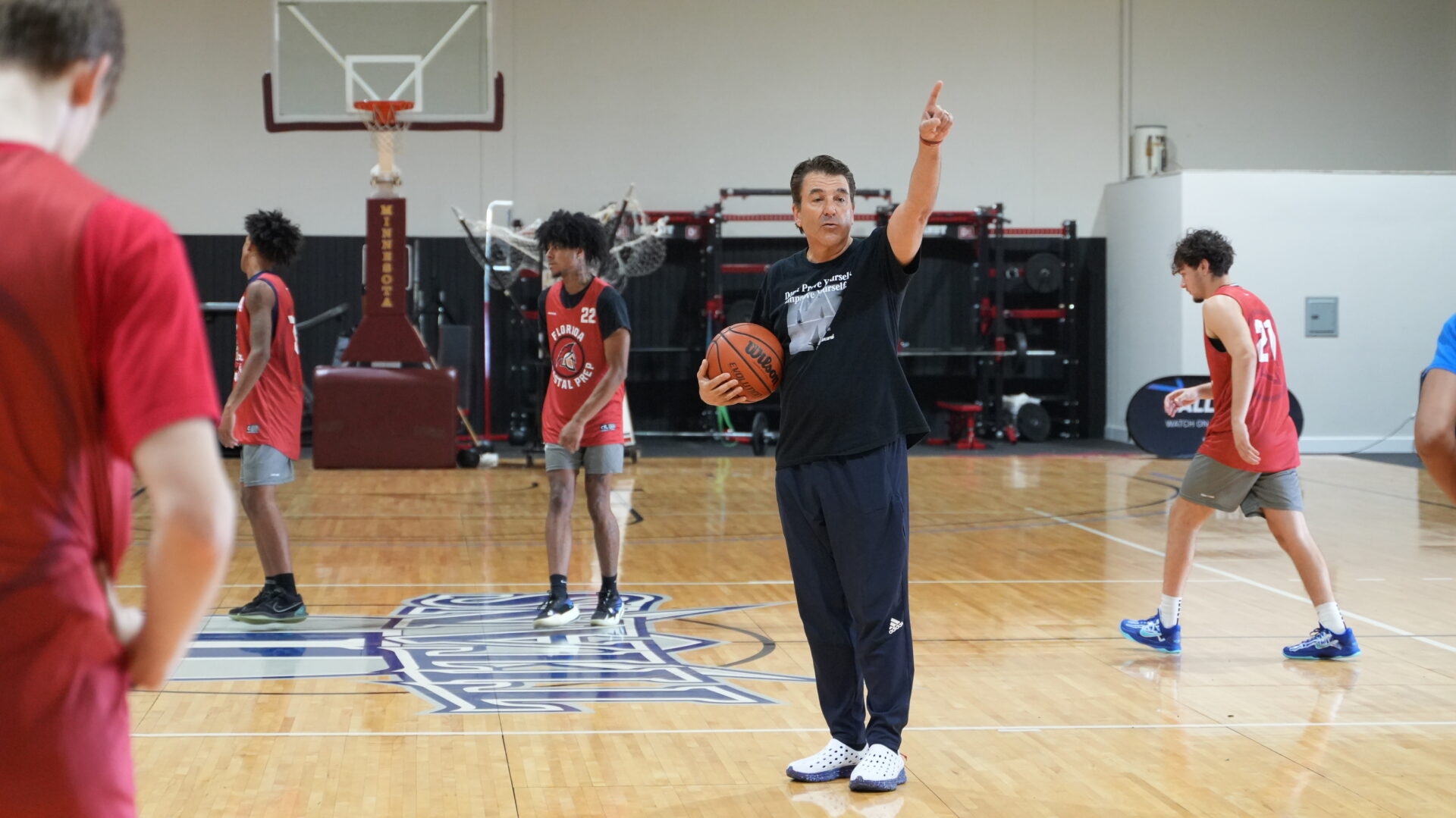
Florida Coastal Prep has quietly built one of the most effective player development pipelines in the state — sending athletes to Division I programs in the Big East, SEC, Big Sky, Ohio Valley, Southland, and Summit League conferences, plus professional leagues domestically and internationally.
What separates FCP from the mega-academies is the personalized development model. With smaller rosters and a coaching staff that includes NBA All-Star Kenny Anderson (14-year NBA career, 1994 All-Star, second overall pick in the 1991 draft), FCP players get individualized attention that larger programs simply can’t match.
Notable FCP Alumni
- Sean East II — Point guard from St. Louis. FCP → University of Missouri (SEC) → NBA G-League. Named to the G-League's top prospects list.
- Brandon Maclin — 6'5" wing from Jackson, TN. FCP → Odessa College → Radford (Big South, 20-win season) → DePaul University (Big East). Hit the game-winning layup to end DePaul's 10-year losing streak against Creighton. 500+ career D1 points.
- Nathan Mariano — FCP → Valley Suns (professional). Three-time Champions of the Americas gold medalist representing Guam internationally.
- Eric Bass Jr. — Guard from Baltimore. FCP → University of Mississippi (SEC).
- Jack Hatten — Guard from Bakersfield, CA. FCP → University of Idaho (Big Sky Conference). Started 28 games as a freshman and scored 1,000+ career points.
- Ring Malith — Center from South Sudan. FCP → SIU-Edwardsville (Ohio Valley Conference).
- Kylin Green — Guard from Lewisville, TX. FCP → Houston Christian University (Southland Conference).
- Gerald Gittens Jr. — Guard from Brooklyn. FCP → Northern Michigan University (GLIAC). Averaged 10+ PPG as a freshman.
- Yulian Ramirez Montero — Forward from the Netherlands. FCP → UMKC (Summit League).
FCP competes in the Grind Session — the premier national post-graduate basketball circuit — and has placed 30+ athletes into college programs across D1, D2, NAIA, and JUCO levels since its founding. The program draws players from 43 states and 22 countries, with international alumni from Brazil, Croatia, Serbia, the Netherlands, Germany, Nigeria, South Sudan, Turkey, and Canada.
Programs offered: Post-graduate (PG year) and high school (grades 9-12) Tuition range: Contact admissions for current rates Key differentiator: Small roster sizes, NBA-level coaching staff, Grind Session competition
Montverde Academy (Montverde)
Montverde Academy is widely considered the top high school basketball program in the nation — and the numbers back it up. The Eagles have won multiple GEICO Nationals championships and produced a staggering number of NBA draft picks.
Notable Montverde Alumni
- Ben Simmons — #1 overall pick (2016 NBA Draft), Philadelphia 76ers. NBA Rookie of the Year, three-time All-Star.
- Cade Cunningham — #1 overall pick (2021 NBA Draft), Detroit Pistons.
- Scottie Barnes — #4 overall pick (2021 NBA Draft), Toronto Raptors. NBA Rookie of the Year.
- D'Angelo Russell — #2 overall pick (2015 NBA Draft). NBA All-Star.
- Moses Moody — #14 overall pick (2021 NBA Draft), Golden State Warriors. NBA Champion.
- Dariq Whitehead — Five-star recruit, Duke → Brooklyn Nets (2023 NBA Draft).
Montverde operates as a traditional four-year high school program (not post-graduate), making it a different model than FCP. Students attend full-time from grades 9-12. The competition for roster spots is intense, and tuition runs significantly higher than most prep programs.
IMG Academy (Bradenton)
IMG Academy is the largest and most well-known sports academy in the world, offering elite training across multiple sports. Their basketball program has produced NBA players and top college recruits.
Notable IMG Academy Alumni
- Anfernee Simons — Skipped college entirely, drafted #24 overall (2018 NBA Draft) by the Portland Trail Blazers. Averaged 22+ PPG in the NBA.
- Keyonte George — Five-star recruit, IMG → Baylor → Utah Jazz (2023 NBA Draft, #16 overall).
- Jarace Walker — Five-star recruit, IMG → Houston → Indiana Pacers (2023 NBA Draft, #8 overall).
IMG’s basketball program benefits from world-class facilities, including dedicated courts, weight rooms, and sports science labs. However, the scale of the program means individual attention can vary, and tuition is among the highest in the country ($70,000+).
Post-Graduate vs. High School: Which Path Is Right?
One of the biggest decisions facing basketball families is whether to pursue a traditional high school program (like Montverde or IMG) or a post-graduate year (like Florida Coastal Prep).
| Factor | High School (4-year) | Post-Graduate (PG Year) |
|---|---|---|
| Timeline | Grades 9-12 | 1 year after high school graduation |
| Best for | Players who know early they want elite competition | Players who need physical, academic, or skill development before college |
| Recruiting exposure | Builds over 4 years | Concentrated in one intense year |
| Academic benefit | Full high school diploma | Additional year to improve GPA, SAT/ACT, and NCAA eligibility |
| Cost | 4 years of tuition | 1 year of tuition |
| Examples | Montverde, IMG Academy | Florida Coastal Prep, Hargrave Military Academy |
The post-graduate route has become increasingly popular because it gives players a critical extra year of physical development, academic improvement, and concentrated recruiting exposure — all without using a year of college eligibility.
Brandon Maclin’s journey is a perfect example: after his PG year at Florida Coastal Prep, he went to Odessa College, tripled his scoring output, earned a D1 offer at Radford, and eventually played in the Big East at DePaul. That trajectory started with one year at FCP.
How to Choose the Right Prep School
When evaluating Florida prep schools, ask these questions:
1. Where have their alumni ended up? Look at real placements, not marketing claims. How many players have signed with college programs in the last three years? At what levels?
2. What’s the coaching staff’s background? Are the coaches former college or professional players? Do they have active relationships with college recruiters? FCP’s staff includes an NBA All-Star (Kenny Anderson) and coaches with 25+ years of experience across four NCAA divisions.
3. What’s the student-to-coach ratio? Smaller programs like FCP offer more individualized development. Larger programs like IMG may have more resources but less personal attention.
4. What academic support is provided? The best prep schools don’t just develop athletes — they develop students. Look for programs that help with GPA improvement, SAT/ACT prep, and NCAA eligibility.
5. What’s the competition schedule? Programs competing in national circuits like the Grind Session provide the highest level of exposure to college scouts and recruiters.
How to Get Recruited from a Florida Prep School
Getting into a prep school is step one. Getting recruited out of one is the goal. Here’s how it works:
- Film and highlights — Every game is filmed. Coaches compile highlight reels and distribute them to college programs.
- Direct coach-to-coach contact — Prep school coaches maintain relationships with college coaches and actively advocate for their players.
- Showcase events — Tournaments and showcases bring hundreds of college coaches to one location.
- Academic eligibility — Players must meet NCAA, NAIA, or NJCAA academic requirements. The best prep schools help players get there.
FAQs
What age group is right for prep school basketball? High school programs (Montverde, IMG) serve grades 9-12 (ages 14-18). Post-graduate programs (FCP) serve players who have completed high school and need one additional year before college.
Do Florida prep schools offer basketball scholarships? Yes. Many programs offer partial or full scholarships based on athletic ability and financial need.
How much does prep school basketball cost in Florida? Tuition ranges from $15,000 to $70,000+ annually depending on the program, with post-graduate years typically on the lower end and four-year academies on the higher end.
Can international students attend Florida prep schools? Absolutely. Florida Coastal Prep has enrolled players from 22 countries including Brazil, Croatia, Serbia, the Netherlands, Germany, Nigeria, South Sudan, Turkey, Canada, and Guam.
What’s the difference between prep school and AAU basketball? AAU is a travel basketball circuit — players attend their regular school and play AAU on weekends/summers. Prep school is a full-time residential program where players live, train, study, and compete together daily.
Ready to take the next step? Apply to Florida Coastal Prep or contact our coaching staff to learn how FCP can help you reach your college basketball goals.
Looking for college basketball programs? Browse our directory of 1,900+ programs across D1, D2, D3, NAIA, and JUCO — with coach contacts and recruiting info.