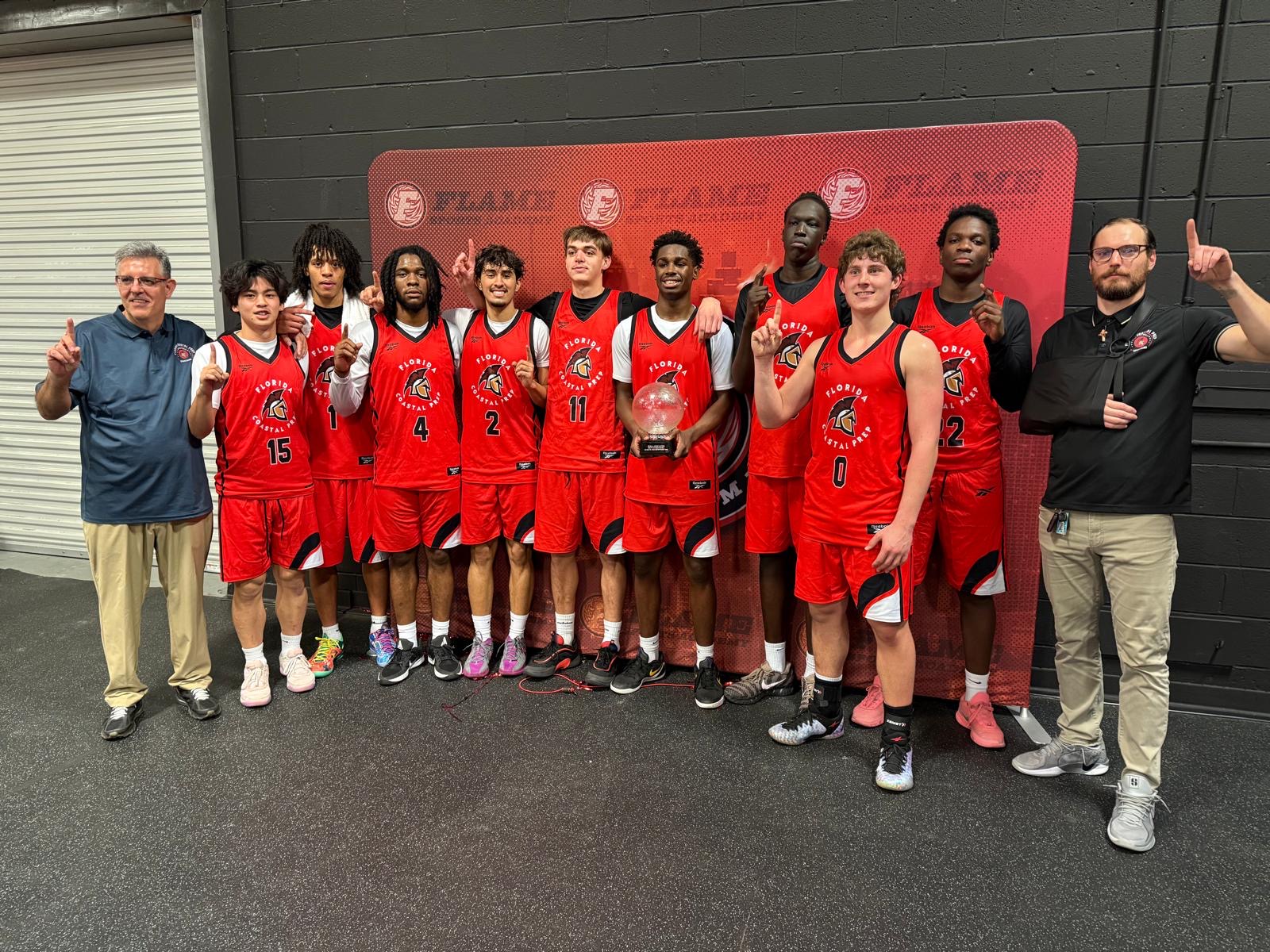
Six Months on the Emerald Coast: What a Post-Grad Basketball Season Really Looks Like
It was a Thursday in August, late afternoon, when Marcus pulled off the highway and got his first look at the Gulf of Mexico.
He had driven six hours from a suburb outside Atlanta with two duffel bags in the backseat and a specific picture in his head — Florida, beaches, the kind of place you see in commercials. What he found instead was something that caught him off guard: water so clear it looked wrong, sand so white it almost hurt to look at, and a sky the color of something out of a painting. Fort Walton Beach, on the Emerald Coast of the Florida Panhandle, sits along a stretch of shoreline that feels more Caribbean than American South. It is not what most eighteen-year-olds from Georgia expect when they think about basketball.
Marcus wasn’t there for the beach. He was there because his senior year had ended without the phone call he’d waited four years to receive. No scholarship offer. A handful of conversations that led nowhere. A coach at a Division II program in the Midwest who said to check back in the fall, which is the recruiting equivalent of someone telling you to call them sometime.
He was, in the language of the process, uncommitted. Which is another way of saying he had a decision to make.
The Choice No One Talks About Honestly
The conventional path for a player in Marcus’s position is JUCO — junior college. Pack up and go immediately, get into a system, hope someone notices you in year one. It’s a legitimate route. Players have made it work.
But Marcus’s high school coach, a man who had sent three players to Division I programs in the past decade and knew the landscape as well as anyone in his county, told him something direct: You’re not ready. Not because you can’t play — you can play. But you need a year where every single day is about getting better. JUCO is about winning now. A post-grad year is about becoming what you need to become.
His parents were skeptical. His mother, a high school science teacher, worried about the cost and what she called “the delay” — the sense that her son was falling behind some invisible schedule. His father, who had played college ball himself at a small school in Tennessee, understood it differently. He remembered the physical jump between high school and college, the way the game accelerated, the bodies that suddenly seemed bigger and faster and more certain. He’d never had a year to prepare for that. He wondered, more than once, what might have been different if he had.
The family spent two weeks looking at post grad basketball programs before settling on Florida Coastal Prep. What convinced them was not a brochure.
It was a phone call with Lee DeForest.
DeForest, who has been coaching basketball for more than twenty-five years and who built FCP into one of the more respected post grad basketball schools in the country, has a way of talking about player development that doesn’t sound like a sales pitch. He talks about what players need, specifically — film, strength, competition level, the relationship between a coach and a player over the course of a long season. He told Marcus’s family that the post-grad year only works if the player is willing to be uncomfortable every single day. He told them it was not for everyone. He was, in other words, the opposite of what the family expected.
Marcus committed to FCP two days later.
August: The First Day of the Rest of the Process
The Spartan Training Center is an indoor, 14,000-square-foot facility with 94 by 50 feet of NBA hardwood. When Marcus walked in for the first morning session, he was the sixth player to arrive. By the time the full group had assembled, he was looking around at kids from fifteen different states, a few from overseas, all of them there for the same reason he was.
The first week of Westside Barbell strength and conditioning — five sessions, every week, built on the conjugate methodology that produces explosive athletes — left Marcus sore in places he didn’t know he had muscles. He had lifted in high school. He had not lifted like this.
“I called my dad after the third day,” Marcus said later in the fall. “I told him I thought I made a mistake. He said, ‘Give it two weeks.’ I gave it two weeks.”
What changed in two weeks was not his body — that takes months — but his understanding of what was being asked. The training wasn’t punishment. It had a logic to it, a progression. The film sessions, run by the coaching staff, showed him things about his game he genuinely hadn’t seen before. Not his strengths — he already knew those. The gaps. The footwork on his left. The way he telegraphed passes. The half-second hesitation before attacking the close-out.
Kenny Anderson, the former All-Star point guard who played twelve seasons in the NBA with the New Jersey Nets, Boston Celtics, and others, sat beside him during one of those early film sessions and said almost nothing. He pointed. He paused the tape. He let Marcus reach the conclusion himself. That, Marcus would say months later, was the moment he understood what kind of post grad year basketball he was actually in.
November: The Games Begin
By November, the schedule started. FCP competes on the SEHAL and PHSBA national circuits, which means the competition level is not theoretical — it is, game by game, among the best available to post-graduate players in the country. The gyms are not always large. Sometimes the travel is brutal. But the coaches in the stands are real, and they are watching.
Marcus had a difficult first three games. He was pressing — trying to produce results before his body and his game had caught up to the standard. DeForest pulled him aside after the third game, a six-point loss in which Marcus had four turnovers, and gave him what amounts to the most important piece of advice in the post grad basketball ecosystem: Stop performing. Start competing.
The distinction matters more than it sounds. Performing means playing for the coaches in the stands, for the offers that might or might not come, for the abstract outcome. Competing means playing the game in front of you, possession by possession, the way you’ve been trained to play it. The offers, if they come, come because you competed.
Marcus competed differently after that conversation. His turnovers dropped. His assist numbers climbed. By late November, he was playing himself into a different category of player than the one who had arrived in August.
January: The Phone Starts Ringing
The first call came on a Tuesday in January, mid-morning. A Division II program in the Carolinas. A coach who had seen film from a November game and wanted to know more. Marcus’s hands were shaking when he got off the phone.
He didn’t tell anyone for three hours. Then he called his mother.
A second call came a week later, from a program at the NAIA level. Marcus was polite but noncommittal. He had learned, by then, that the right offer was not necessarily the first offer. DeForest had been clear about that from the beginning. The goal was not to collect offers — it was to find the right fit, the right program, the right coaching staff. The goal was a career, not an announcement.
But the calls did something important that no training session, no film session, no competitive practice could do by itself. They told Marcus that the process was working. That what he was doing was visible to the people who needed to see it. That the post grad basketball program he had chosen was delivering what it promised.
He started working harder.
March: The Moment
The offer that changed everything came on a Friday afternoon in March. A mid-major Division I program had been tracking Marcus since November — a coach who had attended two of his games in person, who had watched full game film three times, who had spoken twice with DeForest about what kind of player Marcus was becoming. Not what he had been. What he was becoming.
Marcus was in the gym, finishing a shooting session, when his phone rang. He saw the area code and knew.
He sat down on the hardwood and listened. When the call ended, he remained there for a while. The afternoon light was coming through the windows along the south wall, and outside, two miles away, the Gulf of Mexico was doing whatever the Gulf of Mexico does in March — turning colors, going blue to green to something without a name.
He called his mother first. She cried. He did not, but only barely.
He called his father second. His father said: “I know.”
What he meant was that he had known this was possible from the beginning — not certain, not guaranteed, but possible. That had been enough to make the choice. And the choice had been right.
What the Year Actually Is
Here is the thing about a post-grad year that no one explains in the brochures, because it doesn’t fit in a brochure: it is not a fallback. It is not a gap year. It is not what you do when nothing else worked.
It is a deliberate decision to compete at the highest level you can reach, for a full year, under professional guidance, in an environment built specifically for the transformation you need to make. FCP’s athletes have come from 43 states and 22 countries. Alumni include players like Sean East II, who went from the program to the NJCAA Player of the Year award to the SEC to the NBA G League. Paul Biancardi of ESPN, one of the most respected evaluators in college basketball, called FCP’s treatment of players “first class.”
Those things did not happen by accident. They happened because the program is built around a simple premise: if you give a serious player the right structure — the Spartan Training Center, Westside Barbell conditioning, film with Kenny Anderson, academics through Colorado Christian University, supervised team housing with a live-in house coach, and a national schedule where college coaches actually show up — the player will become what he is capable of becoming.
Marcus drove back to Georgia in April with three offers and a choice to make. He was, at nineteen, the player his high school coach had always believed he could be. He just needed a place where that could happen.
That place was 6 hours south, on the Emerald Coast, where the water is the color of something out of a painting.
If you’re a player or a family considering a post grad year basketball path, the FCP post-grad program is built for exactly this journey. Learn more about what the year looks like, or apply now to start the conversation with our staff.
Looking for college basketball programs? Browse our directory of 1,900+ programs across D1, D2, D3, NAIA, and JUCO — with coach contacts and recruiting info.