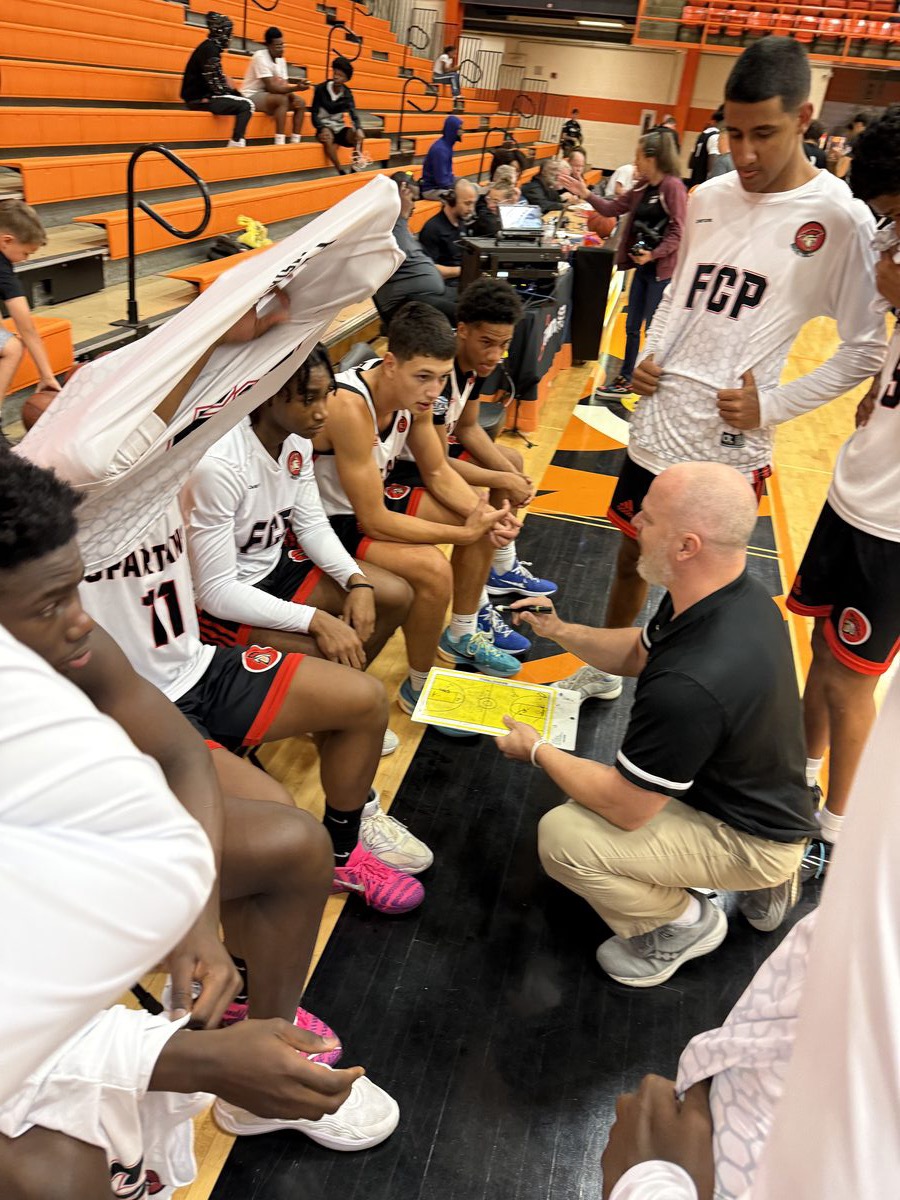
What Is a Post-Grad Year in Basketball? An Eligibility Guide
I’ve had this conversation with hundreds of families over the past 25 years.
A parent calls, usually in the spring of their kid’s senior year. Sometimes the player has offers but isn’t happy with them. Sometimes they don’t have any offers at all. Sometimes they’re academically behind and need to rebuild their transcript. Sometimes they’re physically behind — still growing, still filling out — and they know they need another year before college ball.
The question is always the same: “Is a post-grad year the right move?”
The honest answer is that it depends entirely on the situation. A post-grad year done right can change the trajectory of a player’s career. Done wrong — or chosen for the wrong reasons — it’s an expensive year that accomplishes nothing.
I run Florida Coastal Prep’s post-grad program in Fort Walton Beach, Florida. Here’s everything you need to know to make this decision clearly.
What a Post-Grad Year Actually Is (Not What Most People Think)
A post-grad year is a fifth year of high school, taken after a player has already graduated. The player lives, trains, takes classes, and competes — usually at a prep school or academy — for one additional year before enrolling in college.
It is not a gap year. You are not sitting out.
It is not remediation. You’re not going backward academically.
It is not a punishment for failing to get recruited. Some of the players who benefit most from post-grad years are ones who had options — but not the right options.
A post-grad year is a structured, intentional year of elite development. The goal is to emerge from it as a more polished player with better film, a stronger academic profile, and real offers from programs that fit your level and your life.
Who the Post-Grad Year Is For (Be Honest — It’s Not for Everyone)
I’ll be direct here: a post-grad year is not the right choice for every player.
It makes sense if:
- You graduated high school without an offer that genuinely excites you
- Your grades or test scores didn’t meet NCAA or NAIA eligibility thresholds
- You’re physically still developing — height, strength, coordination — and need more time to catch up to peers who matured earlier
- Your film doesn’t reflect your actual ability, and you need a high-level season to build a better package
- You’re transferring in from another country and need to establish academic credentials in the U.S.
- You had a significant injury your senior year and missed valuable exposure time
It probably doesn’t make sense if:
- You already have a solid offer and you’re just hoping something better will fall out of the sky
- You’re not truly committed to the work — a post-grad program is not a year off, and coaches will see through a player who coasts
- Your family expects the program to do the recruiting work for you — post-grad programs create the conditions; players have to execute
The families who are most disappointed after a post-grad year are the ones who had unrealistic expectations about what it could do. The ones who succeed are the ones who came in knowing exactly what they needed to fix and committed to fixing it.
What You Do During a Post-Grad Year
At Florida Coastal Prep, a typical post-grad year looks like this:
Academically: Players enroll in accredited coursework — either online or in-person — and complete credits that count toward NCAA and NAIA eligibility. For players who need to boost GPA, retake standardized tests, or earn specific core course requirements, this is the year to do it.
On the court: Players train with our staff in Fort Walton Beach. Kenny Anderson, a 14-year NBA veteran, works directly with guards on skill development. I oversee team systems, film study, and competitive preparation. Players compete in high-level showcases, tournaments, and exposure events specifically designed to put them in front of college coaches.
Off the court: We work directly on recruiting — how to email coaches, how to build a profile, when and where to be visible. This is structured guidance, not vague advice. Players leave knowing how to navigate the recruiting process.
The schedule is demanding. That’s by design. College coaches don’t want to see players who had a comfortable development year. They want to see players who were tested.
How a Post-Grad Year Affects Your NCAA Eligibility
This is the question I get most often — and the most important one to understand clearly.
The short answer: A post-grad year does not use up a year of NCAA eligibility, as long as you structure it correctly.
NCAA rules allow a student-athlete four years of eligibility and five years in which to use them. A post-grad year, taken before college enrollment, does not count as one of those five years — provided you do not enroll at a college or university during that year.
What you cannot do during a post-grad year:
- Enroll at a four-year institution (even part-time)
- Accept financial aid or a scholarship from a college or university
- Compete as part of a college team
As long as the player is at a prep academy or post-grad program — not enrolled at a college — their eligibility clock hasn’t started. They enter college with the same four years of eligibility they would have had otherwise.
This distinction matters. I’ve seen families get this wrong and cost their kids eligibility by enrolling at a community college during their post-grad year without understanding the implications. Get guidance from the NCAA Eligibility Center directly, and make sure any program you’re considering understands these rules thoroughly.
The Academic Side: Credits, Transcripts, NCAA Clearinghouse
For players who are academically eligible but want to strengthen their transcript, a post-grad year is a genuine opportunity to add coursework, improve GPA, and retake the SAT or ACT under better conditions than the pressure of a senior year.
For players who are not yet academically eligible, this year is essential — and often the entire reason for doing a post-grad year.
What the NCAA Eligibility Center needs:
- 16 core courses completed in approved subject areas (English, math, natural science, social science, foreign language)
- Minimum 2.3 GPA in those core courses (with SAT/ACT sliding scale)
- Qualifying SAT or ACT score
If a player is missing core courses at the end of senior year — which happens more often than anyone wants to admit — a post-grad year gives them the window to complete those courses through accredited providers and submit them to the Clearinghouse.
At FCP, Alba Reyes oversees all academic coordination. She knows exactly what the Clearinghouse requires, which course providers are approved, and how to structure a player’s transcript to meet eligibility requirements efficiently. This is one of the things that separates a legitimate program from one that promises results without the infrastructure to deliver them.
What to Look for in a Post-Grad Program (And Red Flags to Avoid)
Not all post-grad programs are created equal. Some are legitimate development programs with experienced coaches, real academic infrastructure, and documented placement history. Others are operations that take tuition money and provide very little in return.
What to look for:
- Track record of placements — Ask for names. Legitimate programs can tell you exactly where their players went and what level they’re playing at.
- Full-time credentialed coaches — Not a volunteer staff, not coaches who are there part-time. Real coaches who know how to develop players and understand what college coaches need to see.
- Academic support with real infrastructure — An academic coordinator who has actually navigated the NCAA Clearinghouse, not just someone who says they can “help with academics.”
- Exposure to real coaches — Showcases and events that college coaches actually attend. Ask which specific events the program enters and who has come to watch.
- Transparency about outcomes — If a program can’t tell you their placement rates, or if every answer is vague, treat that as a warning sign.
Red flags:
- Programs that guarantee offers or scholarship outcomes
- Staff with no verifiable coaching background
- No clear academic curriculum — just “we’ll figure it out”
- Locations with no connection to active recruiting circuits
- Programs that charge premium tuition but cannot name recent alumni who went on to play college ball
Why Florida Is an Ideal Location for Post-Grad Basketball
The location question comes up a lot. Why Fort Walton Beach? Why Florida?
A few reasons that are specific and practical:
First, Florida’s climate allows year-round outdoor training. Players don’t lose development time to weather. That matters when you’re trying to compress a significant amount of growth into one season.
Second, Florida sits within a recruiting geography that covers multiple major conferences and a dense concentration of NAIA, D2, and JUCO programs. Getting players in front of coaches at Florida-based programs, plus programs throughout the Southeast, is structurally easier when you’re here.
Third — and this is less obvious — players from colder climates, Midwest programs, and international backgrounds who come to FCP are immediately in a different competitive environment. That change in context, combined with training in a facility designed for serious work, accelerates development in ways that staying in a player’s hometown rarely does.
FCP’s Post-Grad Program Specifically
Our post-grad program is built around three pillars: elite coaching, legitimate academics, and real recruiting exposure.
On the coaching side: I’ve been doing this for 25 years. I’ve seen what college coaches want, and I’ve built a training environment around those standards. Kenny Anderson’s involvement is not a marketing item — he works directly with players on the skills that NBA and college scouts actually evaluate. When a guard learns footwork from a player who spent 14 years at the highest level, that instruction is different.
On the academic side: Alba Reyes manages every player’s academic trajectory. She coordinates with the NCAA Eligibility Center, tracks core course requirements, and ensures players are on a path to meet the clearinghouse standards before they leave our program.
On the recruiting side: We attend the showcases and tournaments where college coaches are actually present. We help players build their film packages, their email outreach, and their recruiting profiles. And because our reputation is tied directly to player outcomes, we have every incentive to put players in front of the right coaches at the right level.
If you’re a player or family seriously considering a post-grad year, I’d encourage you to review our full program details and then reach out directly. We’ll have a real conversation about whether FCP is the right fit — and if it’s not, I’ll tell you that too.
Frequently Asked Questions
Does a post-grad year hurt NCAA eligibility?
No — if structured correctly. A post-grad year taken at a prep academy or non-collegiate program does not count against your five-year eligibility window. You must not enroll at a four-year institution or accept college financial aid during the post-grad year. As long as those conditions are met, you enter college with the same four years of eligibility you would have had otherwise. Always verify your specific situation with the NCAA Eligibility Center before committing to a program.
How old are post-grad basketball players?
Most post-grad players are 18 or 19 years old during their post-grad year — one year older than typical high school seniors. This is not unusual or problematic from a recruiting standpoint. College coaches understand the post-grad pathway and actively recruit from post-grad programs. A 19-year-old freshman is not uncommon, especially at the D2 and NAIA levels.
What is the difference between prep school and post-grad?
A prep school is a secondary school — students are enrolled in high school grades (9–12) and working toward graduation. A post-grad program is for students who have already graduated from high school and are taking a structured year before college enrollment. Some institutions offer both: a traditional prep school program for current high schoolers and a post-grad track for recent graduates. At FCP, we run a dedicated post-grad program for players who have already completed high school, as well as a high school program for current student-athletes in grades 9-12.
Do post-grad players get scholarships?
Players in post-grad programs do not receive college scholarships during the post-grad year itself — they are not yet enrolled in college. However, the purpose of a post-grad year is typically to position a player to earn a college scholarship. Many players who enter post-grad programs without offers exit with scholarship opportunities at D2, NAIA, D1, or JUCO programs. FCP has a documented track record of placing players at programs with financial aid packages. The post-grad year is the investment that makes the scholarship possible.
Looking for college basketball programs? Browse our directory of 1,900+ programs across D1, D2, D3, NAIA, and JUCO — with coach contacts and recruiting info.