Why Florida Is the Best State for Post-Grad Basketball
I’ve worked with players in different parts of the country over the past 25 years. When I decided to build a post-grad program, I chose Florida deliberately — not because it was convenient, but because the state offers a convergence of advantages that you simply can’t replicate in most other places.
This post isn’t a sales pitch for Florida Coastal Prep. It’s a serious argument for why Florida — the geography, the weather, the college landscape, the recruiting circuit — is one of the most strategically valuable places in America to spend a post-graduate year in basketball.
Year-Round Training Weather (and What That Actually Means for a Player)
Most people understand the obvious part: it doesn’t snow here. What they underestimate is the compound effect of that over nine to ten months of training.
When you’re in a northern state, you lose weeks — sometimes months — of outdoor work. Indoor facilities book up. Travel to tournaments gets complicated. Players have off days because the weather forces them inside and the facility isn’t always available.
In Fort Walton Beach, we train outside year-round when we want to. That’s not marketing language — that’s a real operational advantage. Our beach sessions happen in February. Our morning court work in November looks the same as it does in June. Players arrive at FCP and within their first week they’ve logged more clean, uninterrupted training hours than they might in a month at a program dealing with winter.
The cumulative effect of consistent year-round reps — specifically at the age of 18 or 19 when a player is still developing — is significant. You can feel it in a player’s confidence level about eight weeks in. They’ve just done more work than they’ve ever done in their life, and they can tell.
The Florida AAU Circuit and College Recruiting Pipeline
Florida is one of the most active AAU states in the country. The circuit here — particularly through the spring and summer evaluation periods — draws college coaches from every level. D1 assistants fly in for Florida tournaments the same way they fly in for events in Georgia or North Carolina. The state is a legitimate recruiting hotbed.
What that means for a post-grad player is that when the evaluation windows open in April, June, and July, there are opportunities to be seen without traveling across the country. Programs at every level — Division I, Division II, NAIA, JUCO — actively recruit out of Florida. Coaches are already in the state. You don’t have to go find them.
We work inside this circuit strategically. I’ve spent more than two decades building relationships with coaches at every level, and when a player is ready to be seen, we put them in the right environments. Being based in Florida makes that easier because the infrastructure for exposure is already here.
College Density: How Many D1, D2, NAIA, and JUCO Programs Are Within Driving Distance
Florida has one of the deepest college basketball landscapes in the country. Within the state, there are 11 Division I programs, 14 Division II programs, 9 NAIA programs, and more than 20 junior college programs. That’s over 50 college basketball destinations — each with their own scholarship budget, roster needs, and recruiting timelines — within a single state.
When you add in the programs in southern Alabama, Georgia, and Tennessee that are within a day’s drive, the density becomes remarkable. A post-grad player based at FCP has access to a coaching staff that can get their film to dozens of programs within our own network, and who can facilitate visits with realistic options at every level.
This matters more than most players realize. Recruiting is partly about visibility and partly about proximity. When coaches from nearby programs want to come watch one of our guys, they can. When we want to take a player on an unofficial visit to a school they’re serious about, the drive is often two to four hours, not a flight.
The Mental Side: Why Fort Walton Beach Is a Focus Environment
I want to be honest about something that programs don’t always talk about.
A post-grad year fails — not because the player lacks talent, not because the program is bad — but because the player doesn’t have the right environment to focus. The city is too big. The distractions are constant. The social pull of being back in a familiar place is too strong.
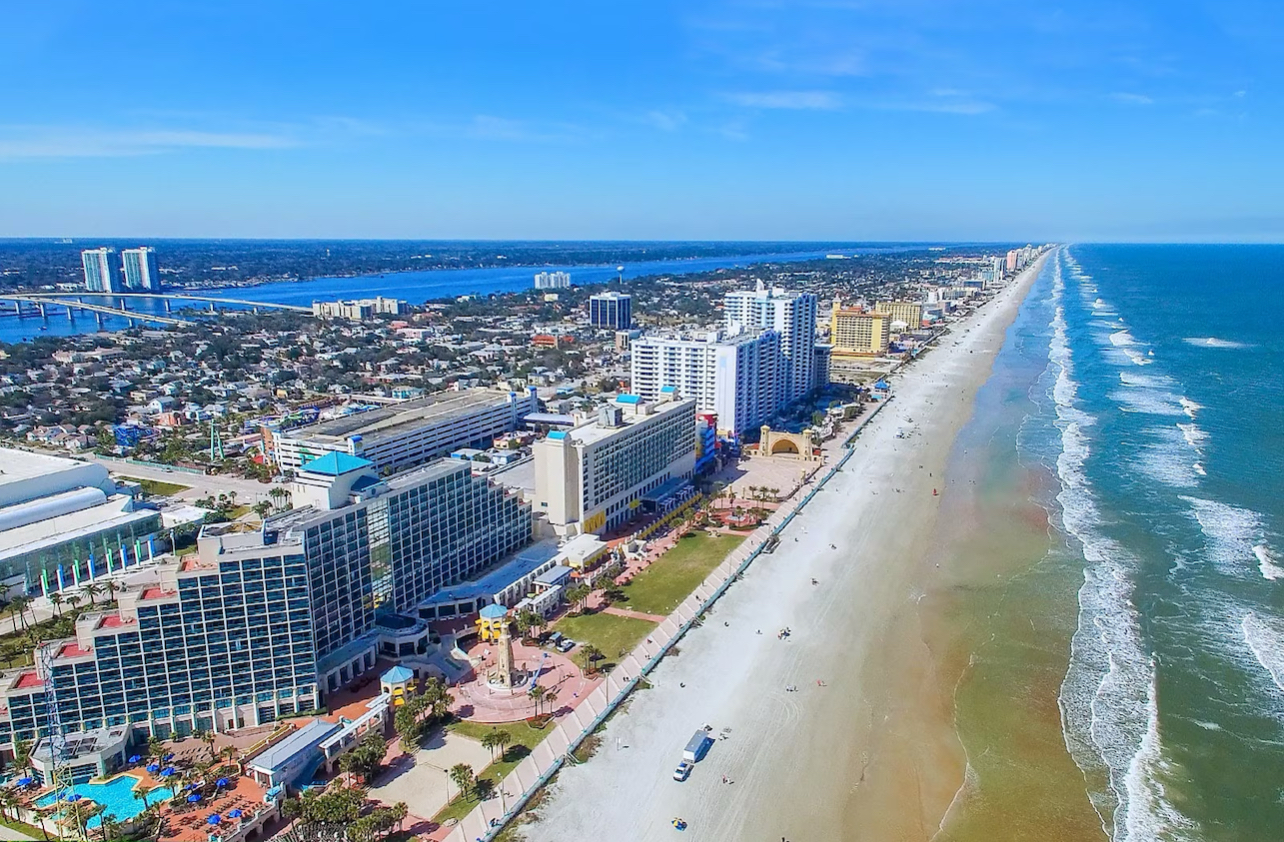
Fort Walton Beach is a small city on the Emerald Coast. It’s not rural — there’s a full community here, good food, access to everything a player needs — but it is deliberately removed from the major urban environments where most of our players come from. You’re not near your old neighborhood. You’re not near the people who want to pull you backward. You’re in a place that genuinely requires you to be intentional about how you spend your time.
The Gulf of Mexico is twenty minutes away. The Spartan Training Center is your second home. Your teammates are going through the same process you are. That combination — physical beauty, geographic separation, shared purpose — produces focus in a way that urban programs often can’t.
I’ve had parents tell me that their son changed in the first month at FCP in a way that surprised them. I always say the same thing: Fort Walton Beach did part of that work.
Florida’s Academic Infrastructure for Post-Grad Students
Florida has specific state-level infrastructure for academic credit that benefits post-grad students. Through our partnership with Colorado Christian University, FCP players can take dual enrollment coursework that counts toward college credit before they ever set foot on a campus. This is not a generic online program — it’s accredited coursework that strengthens a transcript and can apply directly toward a college degree.
The state’s community college system is also one of the strongest in the country, with JUCO programs that have genuine academic and athletic pipelines. If a player’s academic profile needs work, Florida’s JUCO landscape offers real options — not dead ends.
Our Academic Coordinator, Alba Reyes, manages NCAA Eligibility Center registration and core course planning for every player in our program. Florida’s academic infrastructure — dual enrollment, college course access, relationships with nearby institutions — makes that work more effective than it would be in most states.
FCP’s Specific Advantages Within Florida
All of the above is the backdrop. Here’s what we’ve built inside of it.
The Spartan Training Center is a 14,000-square-foot private training facility in Fort Walton Beach. Full basketball courts, strength and conditioning equipment, film room — everything under one roof, available exclusively to our players. We don’t share the facility with a high school program or a public rec center. When our guys walk in at 7:00 a.m., the building is ours.
Housing is handled. Players live together near the facility, close to the Gulf, in a structured environment where the program extends beyond practice hours. This isn’t a commuter program. It’s a full-immersion model, which is the only kind that consistently produces results at this stage of development.
And we’re on the Emerald Coast — one of the most genuinely beautiful stretches of coastline in the country — which does things for a player’s mental health and emotional baseline that you can’t replicate in a gym. I believe that. Players who feel good about where they are train harder and respond better. The environment is part of the program.
Ready to Explore Florida as Your Post-Grad Home?
If you’re a player or parent evaluating post-grad programs, the state matters. Don’t just evaluate the program. Ask what the environment, the college landscape, and the climate will do for your development over nine months.
Florida is worth a serious look — and Florida Coastal Prep is worth a serious conversation.
Apply now or contact us to talk through whether FCP is the right fit.
Looking for college basketball programs? Browse our directory of 1,900+ programs across D1, D2, D3, NAIA, and JUCO — with coach contacts and recruiting info.