From Zero Offers to D1: How FCP Athletes Get Recruited
Every year, thousands of high school basketball players finish their senior season without a single college offer. They’re told they’re too small, too raw, too late. They watch teammates sign letters of intent while their phone stays quiet.
It’s one of the most frustrating experiences in youth sports — knowing you can play, but not having anyone willing to bet on you yet.
At Florida Coastal Prep, some of the program’s biggest success stories started exactly there. Zero offers. Zero interest. Zero options — until they found the right environment to prove what they could do.
Why Offers Don’t Come (And What Changes the Equation)
College coaches don’t recruit potential. They recruit evidence.
They want film. They want measurable improvement. They want to see an athlete compete against verified talent in environments where the competition level is real. Most high school seniors — no matter how talented — simply haven’t had enough exposure to check those boxes.
A post-graduate year changes the equation by giving athletes exactly what they’re missing:
- Professional game film against elite competition
- Physical development that transforms their body and athleticism
- A national schedule that puts them on the court where scouts are watching
- A coaching staff with direct relationships to college programs at every level
The athletes who arrive at FCP with no offers aren’t less talented than the ones who already have scholarships. They just haven’t had the platform yet.
The Daily Grind: Where Development Actually Happens
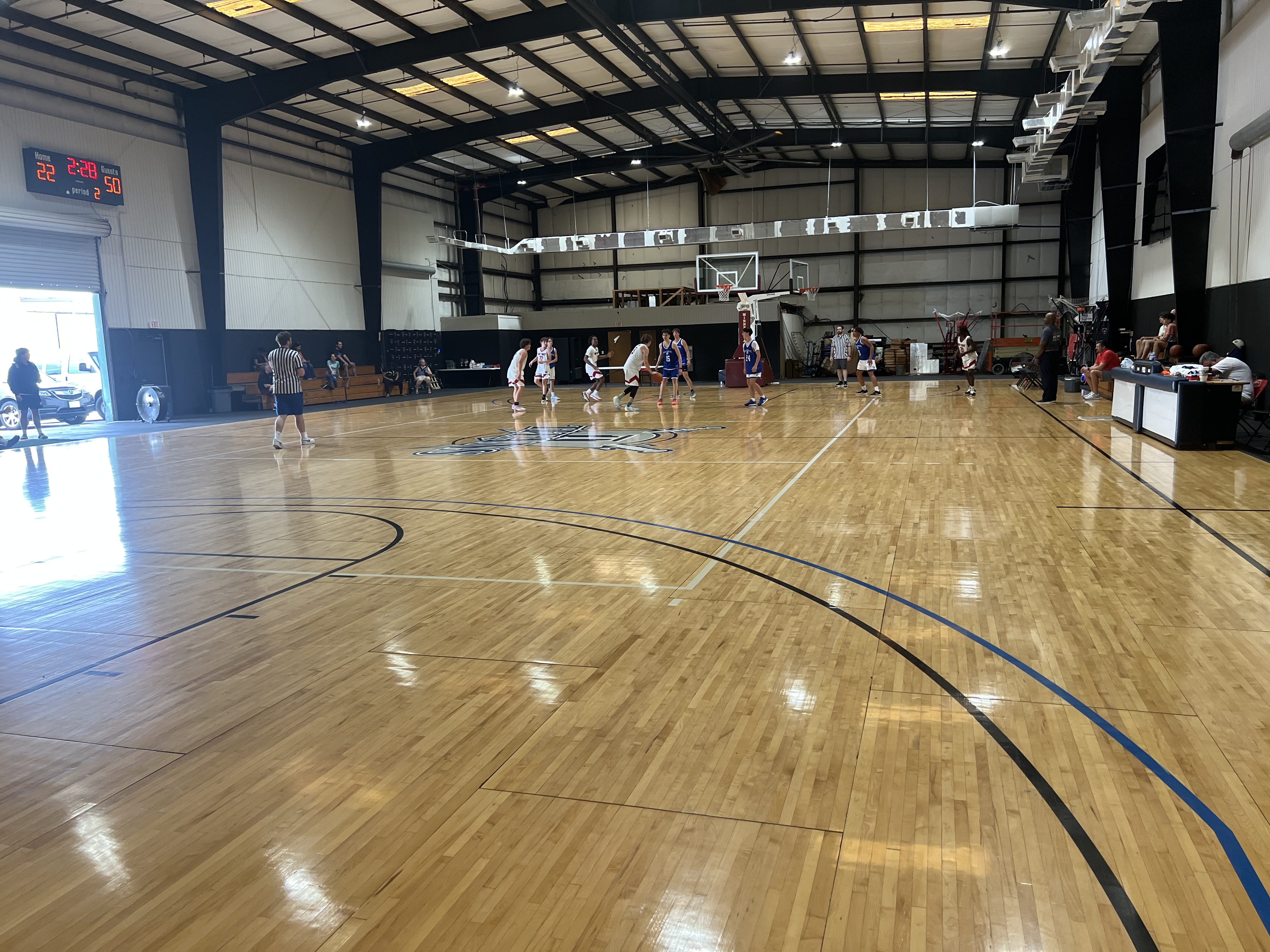
The reason FCP athletes make the kind of jumps that turn zero offers into multiple offers isn’t a secret. It’s the daily structure.
Every day inside the Spartan Training Center — a 14,000-square-foot facility with professional hardwood, a turf performance zone, and 24/7 access — athletes go through a development cycle that mirrors what they’ll face at the college level:
Morning: Speed and strength training built on Westside Barbell’s conjugate methodology. Five sessions per week. Max effort days. Dynamic effort days. Explosive power development that changes the way athletes move on the court.
Midday: Team practice. Competitive, physical, game-speed reps against teammates who are all fighting for their own college opportunities. Every practice is a proving ground.
Afternoon/Evening: Individual skill development. 1-on-1 sessions. Film breakdown. Shooting programs with 300–500 makes per session. Position-specific work tailored to what each athlete needs.
That daily structure — repeated over an entire season — produces the kind of transformation that college coaches can see on film. An athlete who arrives in August at 185 pounds with an inconsistent jumper doesn’t look the same by January after five months of Westside Barbell training and hundreds of hours of court work.
Film That Coaches Actually Watch
One of the biggest obstacles for recruits is that their high school game film doesn’t show them in the right context. A 25-point game against a weak conference team doesn’t move the needle for a D1 coach the way 14 points against a nationally ranked opponent does.
FCP’s national schedule solves that problem. Every game in the SEHAL and PHSBA circuits — and every elite event on the calendar — features real competition. The film from those games shows athletes performing against future college players in high-pressure environments.
The coaching staff at FCP doesn’t just film games and hand over raw footage. Athletes get:
- Professionally edited highlight reels that showcase their strengths
- Full game film that coaches can break down possession by possession
- Film sessions where athletes learn to see themselves the way college coaches see them
When an FCP coach sends film to a college program, that college coach knows the competition level is legitimate. That trust — built over seven seasons of placing athletes at every level — is one of the most valuable assets the program offers.
A Staff That Opens Doors
Recruiting isn’t just about talent. It’s about connections.
FCP’s coaching staff has been together for years, and over that time, they’ve built relationships with college programs across the country. When a coach calls a college staff about a player, the college coach picks up — because the relationship is already there.
That matters more than most families realize. A talented athlete with no connections is invisible. An athlete represented by a coaching staff with a proven track record and years of established trust gets his film watched, his name discussed, and his phone ringing.
The staff doesn’t just send mass emails. Each athlete gets an individualized recruiting plan:
- Identifying the right level and the right fit for each player
- Direct communication with college coaching staffs
- Campus visit coordination and preparation
- Guidance on the recruiting timeline, eligibility, and the enrollment process
Some athletes arrive at FCP targeting D2 and end up with D1 offers. Others arrive unsure if they can play at any level and leave with multiple options. The difference is a coaching staff that knows the landscape, knows the athlete, and knows how to connect the two.
The Competition Advantage
College coaches want to see athletes compete against high-level talent. FCP’s schedule in the SEHAL, PHSBA, and national showcase events provides exactly that — consistent, verified competition that gives scouts confidence in what they’re seeing.
Every game on the schedule is against programs loaded with athletes headed to college. Every gym is filled with coaches evaluating talent. Every moment is an opportunity to prove you belong.
For an athlete who graduated high school with zero offers, that exposure is everything. One strong weekend at a national event. One dominant performance against a top-ranked opponent. One highlight clip that a college coach can’t ignore. That’s often all it takes — and FCP’s schedule provides dozens of those opportunities across a full season.
Competitive Practices That Simulate the College Experience
What makes FCP practices different from most post-graduate programs is the level of competition happening inside the gym every single day.
When your teammates are athletes from 43 states and 22 countries — all competing for their own college opportunities — practice becomes the hardest part of the day. The physicality, the pace, the accountability from coaches who demand college-level effort on every possession.
Athletes who survive that daily grind arrive at their college programs already adjusted to the intensity. There’s no culture shock. The speed of the game isn’t new. The physical demands aren’t new. The expectation to compete on every possession isn’t new. They’ve already been doing it — every day at FCP.
The Results Tell the Story
Since 2019, FCP athletes have gone on to compete at every level of college basketball — NAIA, JUCO, Division II, Division I, and beyond. Athletes from 43 states and 22 countries have come through the program, and the common thread is always the same: they arrived needing development, exposure, and opportunity. They left with all three.
The athletes who make the biggest jumps are rarely the ones who showed up with the most talent. They’re the ones who bought into the daily grind — the 6 AM weight room sessions, the competitive practices, the film work, the individual skill development, the structure and accountability that the coaching staff has spent years building.
Zero offers doesn’t mean zero future. It means you haven’t found the right environment yet.
Think a post-graduate year could be your path? Apply to Florida Coastal Prep or learn more about the PG program. You can also contact our coaches directly to start the conversation.
Questions about the program? Contact our coaching staff directly.
Looking for college basketball programs? Browse our directory of 1,900+ programs across D1, D2, D3, NAIA, and JUCO — with coach contacts and recruiting info.