Quick Answer: Recruiting Requires Proof
A basketball academy helps with college recruiting only when it creates proof a college coach can trust: full game film, a schedule against opponents they respect, a verified transcript, honest measurements, and a coach who will pick up the phone and vouch for you.
Florida Coastal Prep is built to connect player development with recruiting execution. Athletes are not just training harder. They are becoming easier for college coaches to evaluate, and easier to say yes to.
Recruiting Is Targeting, Not Hoping
The right college list depends on film, academics, size, position, timeline, budget, and roster need. FCP's recruiting pages point families toward recruiting strategy, program research, and placement proof instead of generic exposure language.
How This Page Is Grounded
This guide is built from FCP's published program facts: Fort Walton Beach location, supervised housing, the 14,000 sq ft Spartan Training Center, coaching staff, college placement history, academics, tuition context, and recruiting resources. Families should verify fit through coaches, housing, tuition, commitments, and admissions.
Connect With Us
Recruiting updates, commitment news, and program info, direct to your inbox.
What A College Coach Needs Before They Can Recruit You
College coaches are not withholding offers because they have not heard your name. They are withholding offers because they cannot finish an evaluation. Every recruitment stalls at one of five checkpoints, and a basketball academy for college recruiting exists to clear all five.
| Checkpoint | What The Coach Is Actually Asking | What Kills It |
|---|---|---|
| Film | Can I see him play defense and make reads, not just make shots? | A three-minute highlight reel with no full games behind it. |
| Schedule | Who did he do that against? | Big numbers against opponents nobody can identify. |
| Academics | Will he be eligible and will he still be eligible in year two? | A transcript nobody checked until signing season. |
| Measurables | Is he the size and body he says he is? | Inflated heights. Coaches find out on the visit and stop trusting everything else. |
| A reference | Who can I call who will tell me the truth about him? | A coach with no college relationships, or one who oversells every player. |
Notice that only one of those five is about basketball skill. That is the part most families focus on and the part most training programs sell. It is necessary. It is not sufficient.
Why Most Programs Only Solve One Piece
There are three common models, and each one leaves a gap.
- The skills trainer. Excellent workouts, real improvement, no games, no film, no coach contact. The player gets better and nobody outside the gym ever finds out.
- The mixtape program. Heavy social media, highlight edits, big follower counts. Coaches see thirty seconds of made shots and no evidence of defense, spacing, or decision-making. Evaluations stall.
- The roster warehouse. Large teams, thin minutes, a schedule padded with easy wins. A player can spend a full year there and finish with less usable film than he started with.
A recruiting-capable academy has to run development, competition, film, academics, and outreach as one connected system. If any one of those is outsourced or missing, the year does not convert.
Film: Full Games, Posted Publicly
This is the single clearest test you can apply to any academy. Ask them to show you a full, unedited game from last season, and ask where a college coach could find it without asking permission.
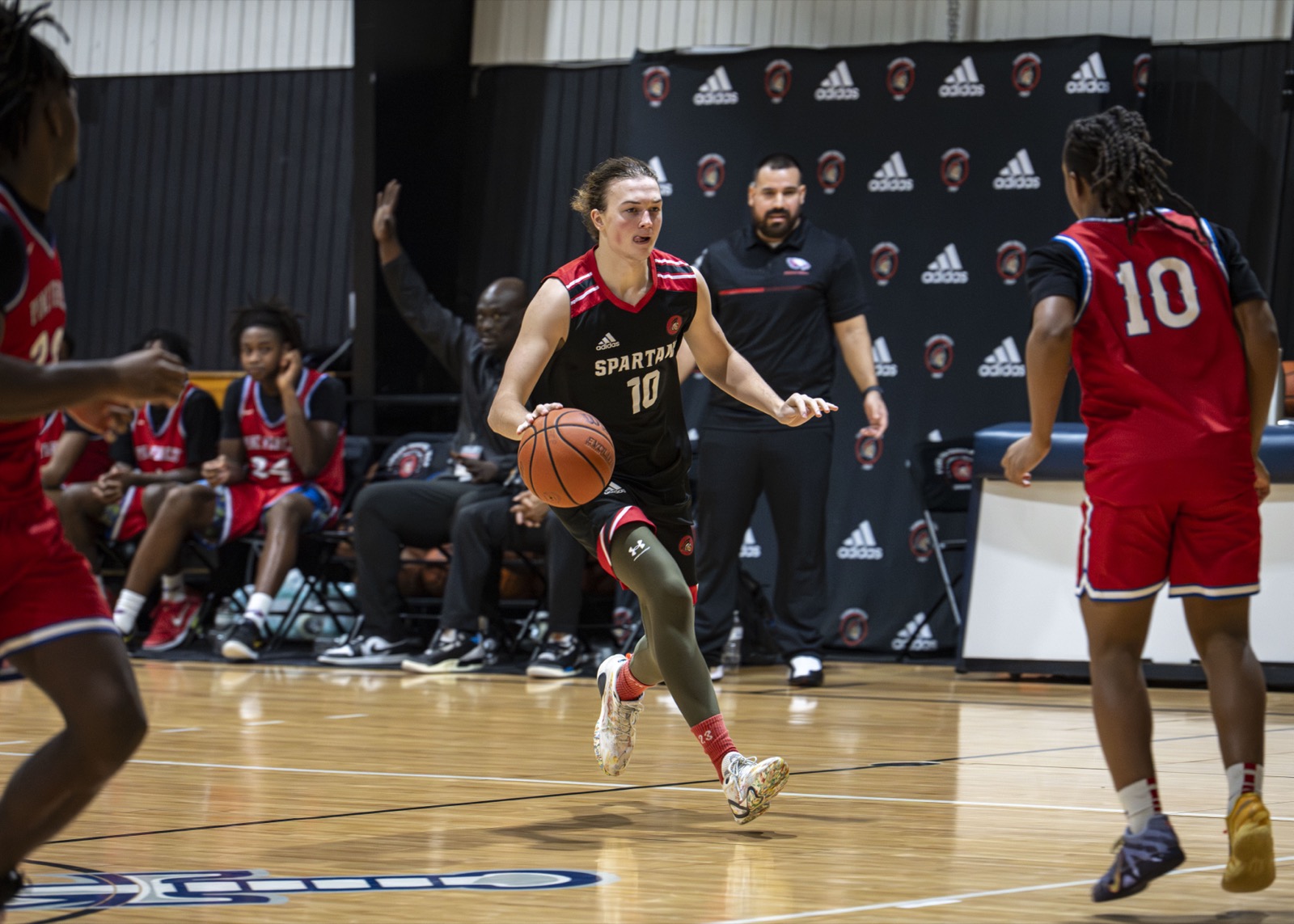
Florida Coastal Prep posts full game broadcasts publicly on the FCP YouTube channel. Not clips. Whole games, both halves, against real opponents, with the bad possessions left in. A college coach can watch an entire game at 11pm on a Tuesday without emailing anyone for a login.
FCP Red vs Andrew College. A full game against a college roster, posted in full on the FCP channel.
Highlights still have a job. They open the door. But every coach who likes the highlight immediately asks for the full game, and the programs that cannot produce one lose the recruit right there.
Schedule: Who You Play Is Part Of Your Evaluation
Twenty points means nothing until a coach knows who was guarding you. FCP schedules national prep programs and college opponents so the film carries context on its own.
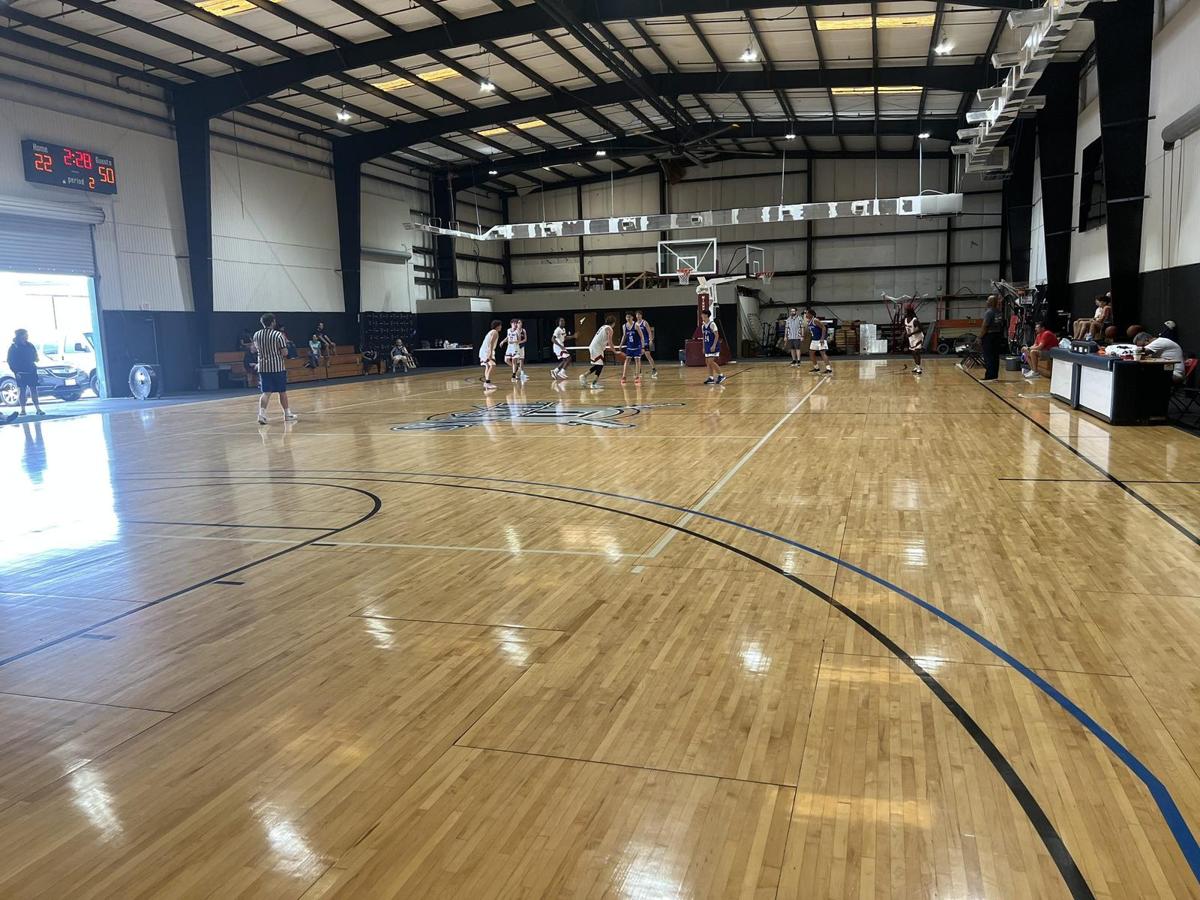
Recent FCP opponents include Andrew College, DME Academy, Process Academy, Legacy Christian Academy, Middle Georgia Prep, Innovation Academy, Exclusive Prep, and Rose Elite Academy. FCP teams also compete through the Grind Session, SEHAL, and SIAA, which puts athletes in front of college staffs at events rather than only in a home gym.
When a coach in the Sun Belt or the Ohio Valley opens your film and sees a college JV roster on the other bench, the evaluation moves faster. That is the entire point of the schedule.
Academics: The Quietest Way A Recruitment Dies
Every year, players lose offers they already earned because a transcript did not clear. Core course requirements, GPA thresholds, and the differences between NCAA, NAIA, and NJCAA eligibility rules are not something a seventeen-year-old should be tracking alone in April.
FCP runs academics as a scheduled daily block, not an afterthought. Athletes take core coursework in the morning, sit supervised study hall in the evening, and get eligibility guidance early enough that a problem can still be fixed. Families should verify their own athlete's status with the NCAA Eligibility Center and the relevant association, and FCP's academic staff helps that happen on time rather than at the deadline.
See Academics at FCP for the full daily structure and course model.
Outreach: Somebody Has To Actually Make The Calls
The difference between a program that develops players and a program that places them is usually one thing: whether an adult with real college relationships is working the phone on your behalf.
FCP's recruiting work runs through coaches who have lived at the levels they are calling.
- Lee DeForest, National High School Director. Twenty-five years coaching across NCAA Division I, Division II, NAIA, and JUCO. That range is the point. There is very little of the college game he has not worked inside, and few levels where he does not know someone to call.
- Vando Becheli, National Post Grad Director and Director of Recruiting. Over 120 wins at Utah State University Eastern with a Region XVIII championship and a third-place NJCAA national finish, followed by 20-win seasons every year at Lighthouse Christian College. A Brazilian native with 25 years of professional playing and coaching experience and a recruiting network across South America, Europe, and Asia.
- Kenny Anderson, Mentor and Leadership Trainer. The second overall pick in the 1991 NBA Draft, a 14-year NBA career, a 1994 NBA All-Star, and a former head coach at Fisk University.
Meet the full staff on the FCP coaches page.
Placement: What The Record Actually Says
Ask every academy for its placement list by name and level. Here is FCP's, pulled live from the same data that powers the commitments page.
| Level | FCP Athletes Placed |
|---|---|
| NCAA Division I | 11 |
| NCAA Division II | 10 |
| NCAA Division III | 2 |
| NAIA | 7 |
| JUCO | 27 |
| Professional | 2 |
| Total tracked commitments | 59 |
Division I destinations include DePaul University, Houston Christian University, Northwestern State University, Radford University, SIU-Edwardsville, Southern University, Troy University, UMKC, University of Idaho, University of Mississippi.
The JUCO number is not a weakness in that list, it is honesty. Most unsigned players are not one good workout away from a Division I scholarship, and a program that promises otherwise is selling you something. The right first stop is the level where you will actually play, from which you can transfer up. That is how several FCP athletes reached Division I in the first place.
What The Recruiting Year Looks Like, Month By Month
Recruiting is a calendar, not a mood. A year at a recruiting-focused academy should look roughly like this.
- Arrival through the first month. Honest evaluation. Verified height, weight, and position. A realistic target list of college levels, built from film rather than hope.
- Early season. First full games recorded and posted. Transcript reviewed against eligibility requirements. Introductory outreach begins to the schools on the list.
- Mid season. Film refreshed monthly so coaches see improvement rather than one snapshot. Target list adjusted up or down based on what the film actually shows.
- Late season. Event exposure through Grind Session, SEHAL, and SIAA. Coaches invited to specific games. Follow-up calls from FCP staff to the schools showing interest.
- Spring. Offers, visits, and decisions. Academic paperwork completed so nothing stalls at signing.
The families who struggle are usually the ones who wait for the offer to arrive. The families who succeed treat every month as a deliverable.
Seven Questions To Ask Any Basketball Academy
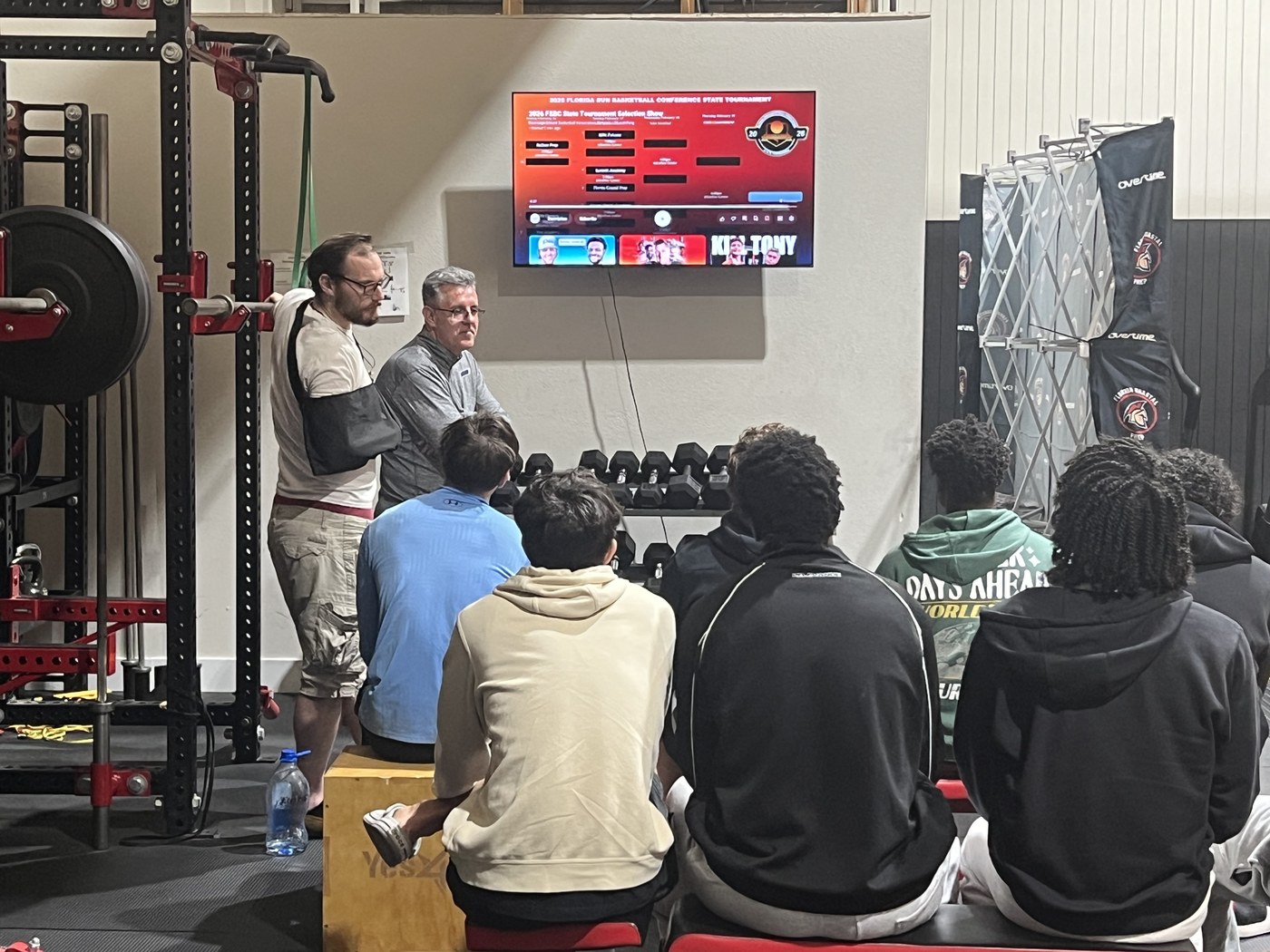
Use these on FCP too. A program that cannot answer them plainly is telling you something.
- Can I watch a full unedited game from last season right now, without a login?
- Who did you play last season, and can I see the full schedule?
- Where did last year's graduating class end up, by name and school?
- Who on your staff personally contacts college coaches, and which levels do they have relationships at?
- How many athletes are on the roster, and how many minutes will my son realistically play?
- How is academic eligibility tracked, and who reviews the transcript?
- What happens if my son turns out to be a JUCO player and not a Division I player? Will you tell me?
That last question is the one that separates programs. An academy that will not give you an honest level assessment is not recruiting for you. It is recruiting for itself.
Keep Reading
Use this page with Recruiting Strategy, Commitments, Post-Grad Basketball, How To Play College Basketball After High School, and How To Get Recruited For College Basketball.
The Post-Grad Year Has To Create Separation
A good post-grad year is not a pause button. It should change the player's body, habits, film, academic profile, and college options. FCP's post-grad content is built around that standard: one year, clear development priorities, and a recruiting plan that matches the player's actual level.
How This Page Is Grounded
This guide is built from FCP's published program facts: Fort Walton Beach location, supervised housing, the 14,000 sq ft Spartan Training Center, coaching staff, college placement history, academics, tuition context, and recruiting resources. Families should verify fit through coaches, housing, tuition, commitments, and admissions.
Plan the Whole Recruiting Path
These guides connect the questions families ask before choosing a basketball academy: development, housing, cost, recruiting, and realistic college options.
Need A Recruiting Plan?
FCP evaluates film, academics, level fit, and development needs before recommending the right path. Send your film and transcript and get an honest read.