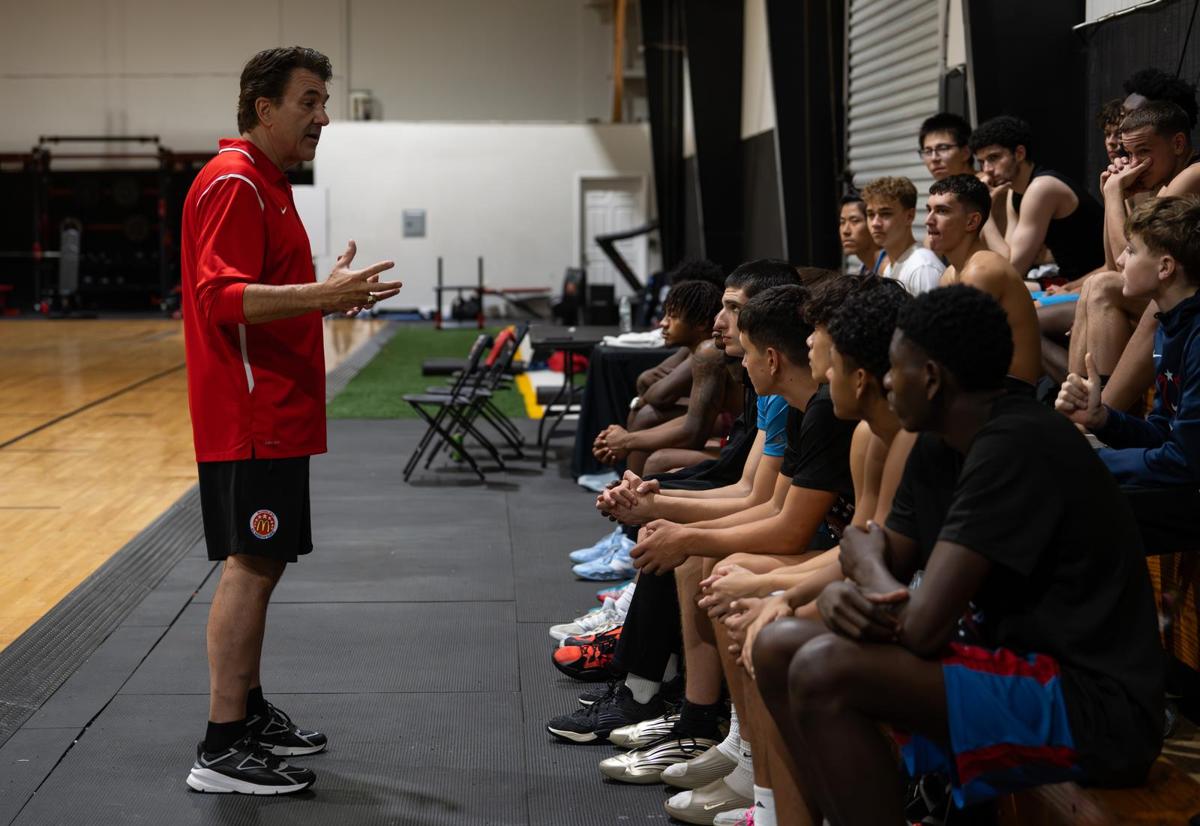
Quick Answer: Basketball Training Academy in Florida
Florida Coastal Prep is a basketball training academy in Fort Walton Beach, on Florida's Emerald Coast, for athletes who need more than workouts. FCP combines daily skill development, strength and conditioning, film study, competition, accredited academics, housing, and college recruiting support inside a basketball-only environment.
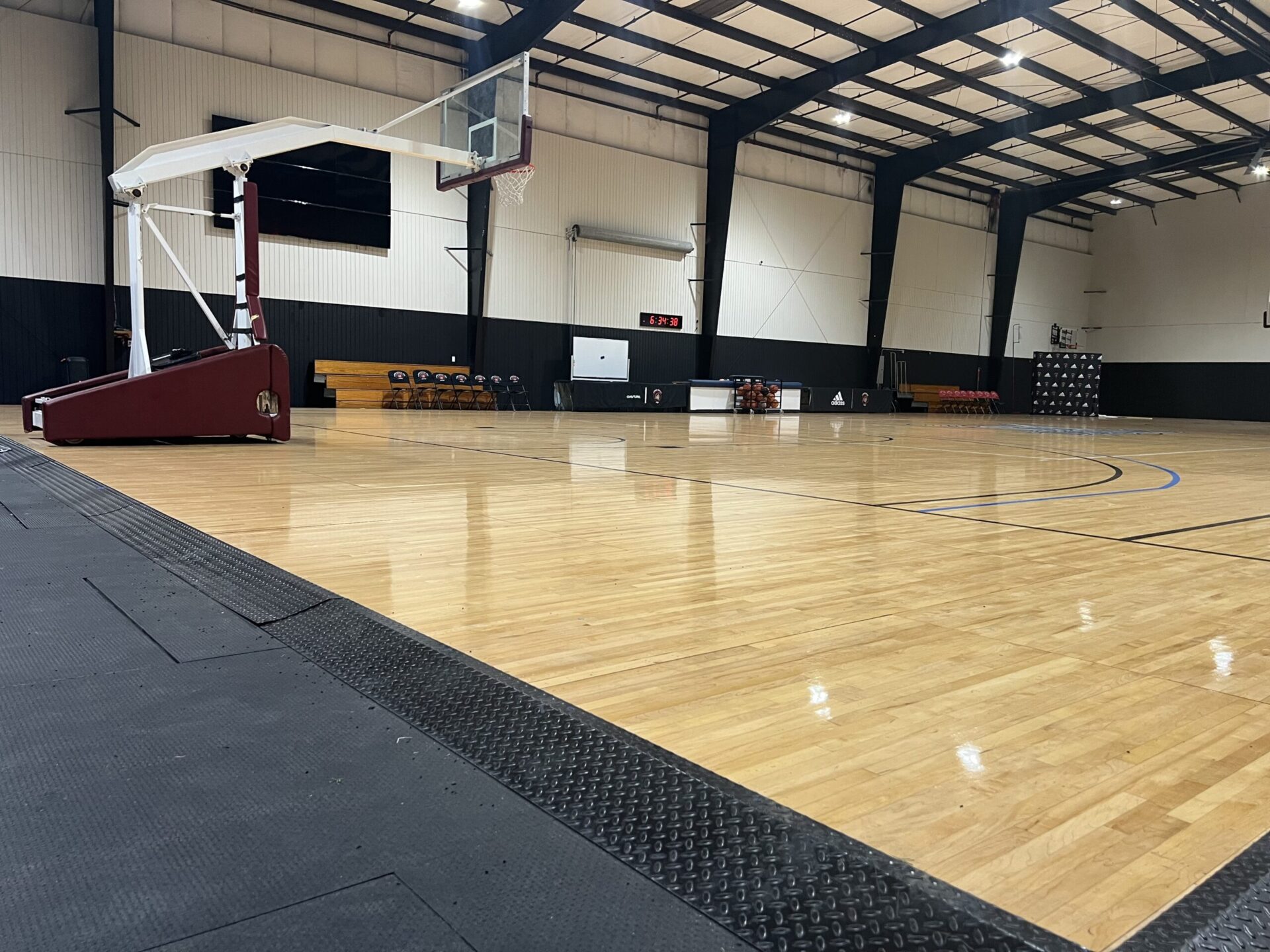
Training happens at the Spartan Training Center, a dedicated 14,000 sq ft indoor facility. The roster is kept intentionally small so athletes get reps rather than a seat on a bench.
Training Has To Show Up On Film
A training academy earns its value when the athlete's footwork, balance, shot prep, handle, reads, and conditioning become visible in game possessions. This is why FCP connects individual workouts, strength training, and film study to recruiting outcomes.
How This Page Is Grounded
This guide is built from FCP's published program facts: Fort Walton Beach location, supervised housing, the 14,000 sq ft Spartan Training Center, coaching staff, college placement history, academics, tuition context, and recruiting resources. Families should verify fit through coaches, housing, tuition, commitments, and admissions.
Connect With Us
Recruiting updates, commitment news, and program info, direct to your inbox.
Trainer, Team, Or Training Academy?
Families searching for a basketball training academy in Florida are usually choosing between three very different things. It helps to name them honestly.
| Skills Trainer | Club / AAU Team | Training Academy | |
|---|---|---|---|
| Frequency | A few hours a week | Practices plus weekend events | Every day, scheduled |
| Strength work | Usually separate or absent | Rarely included | Built into the week |
| Film | Rare | Highlights only | Full games, reviewed as a group |
| Academics | Not involved | Not involved | Scheduled daily with eligibility tracking |
| Recruiting | Player's own responsibility | Exposure events | Staff outreach to specific colleges |
| Best for | Fixing a specific skill | Getting seen in a season | Changing a player's trajectory |
None of these is wrong. But if a player has plateaued, the problem is usually not the drill list. It is that he trains hard for four hours a week and lives an ordinary life for the other one hundred and sixty-four. An academy changes the denominator.
The Spartan Training Center
FCP trains at the Spartan Training Center, a dedicated 14,000 sq ft indoor basketball facility in Fort Walton Beach, Florida. It is a basketball building, not a shared community gym with a basketball window on Tuesdays.
Athletes have access around the clock. That matters more than it sounds. The players who improve fastest are almost always the ones who come back at nine at night to shoot four hundred more, and that only happens if the door is open.
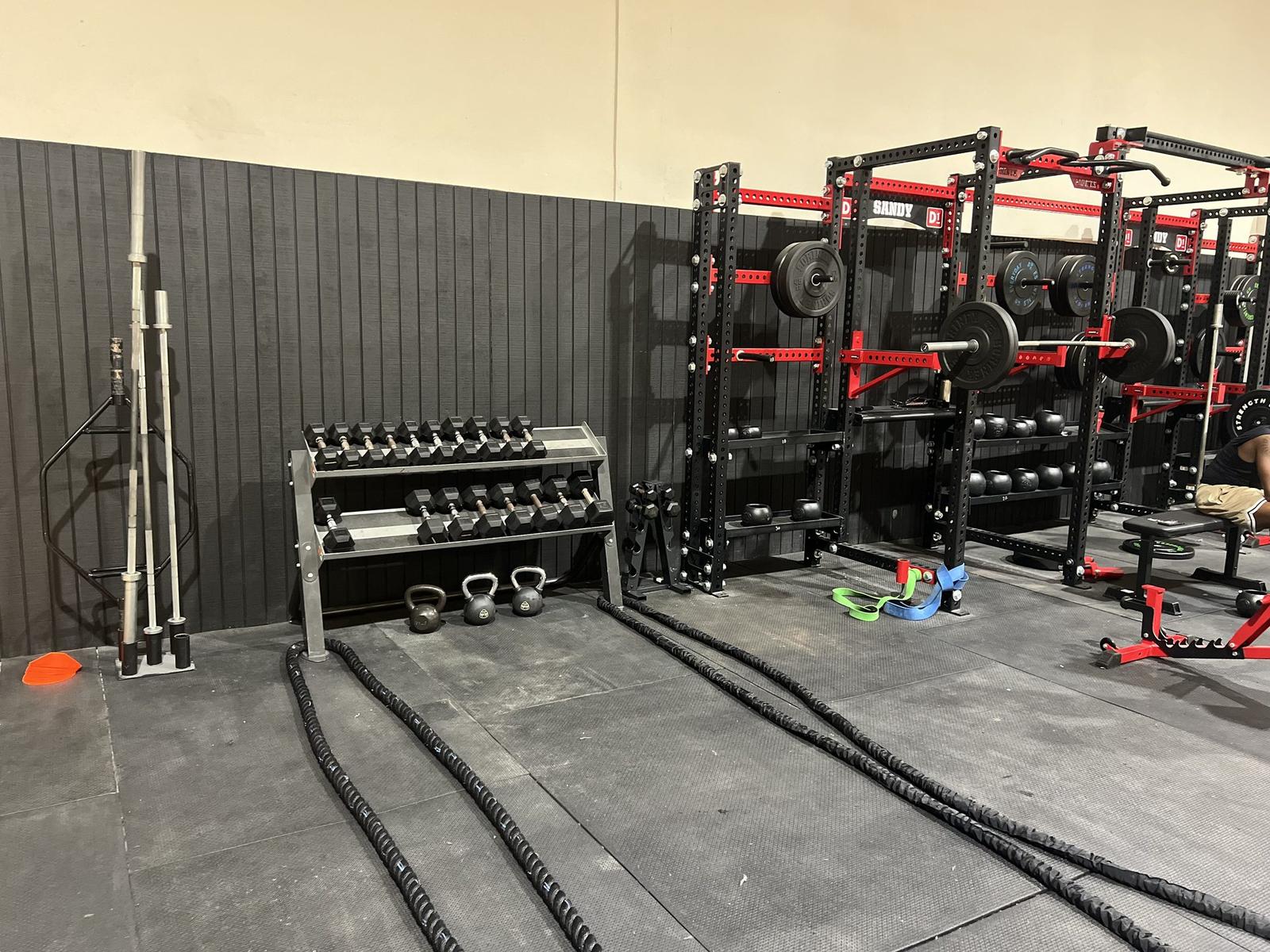
A look inside Florida Coastal Prep in Fort Walton Beach.
What A Training Day Actually Looks Like
This is the part most programs describe vaguely. Here is the real block schedule.
| Time | Block | What Happens |
|---|---|---|
| 6:30 AM | Wake and breakfast | Morning routine and team meal. |
| 8:00 AM | Academic Block I | Core coursework: English, math, science, history. |
| 11:00 AM | Academic Block II | Electives, dual enrollment coursework, NCAA eligibility prep. |
| 12:30 PM | Lunch | Team meal and preparation for afternoon training. |
| 1:30 PM | Team Practice | Skill work, team drills, and film review at the Spartan Training Center. |
| 4:30 PM | Strength & Conditioning | Performance training, sports science, physical therapy assessments. |
| 6:00 PM | Dinner | Team meal, nutrition guidance, recovery. |
| 7:30 PM | Study Hall | Supervised homework, exam prep, academic tutoring. |
| After | Optional gym | Individual shooting, ball handling, and recovery work. The facility stays open. |
Strength and conditioning runs five days a week. The block structure exists so travel, showcases, and games do not knock a player off track academically. Full detail is on the Academics page.
The Five Training Blocks, And What Each One Changes
1. Skill development
Position-specific work with coaches who played and coached at the level the athlete is chasing. Guards get shot preparation, live-dribble reads, and ball screen decision-making. Bigs get footwork, short roll passing, and rim protection angles. The measure of good skill work is not how it looks in the gym. It is whether it shows up on film in a game, under pressure, without being called for.
2. Strength and conditioning
The most common reason a talented high school player does not survive a college freshman year is that he cannot hold his position or finish through contact. Strength work is not about a bigger bench press. It is about being the same player in the thirty-fifth minute that you were in the fifth. See Strength Training.
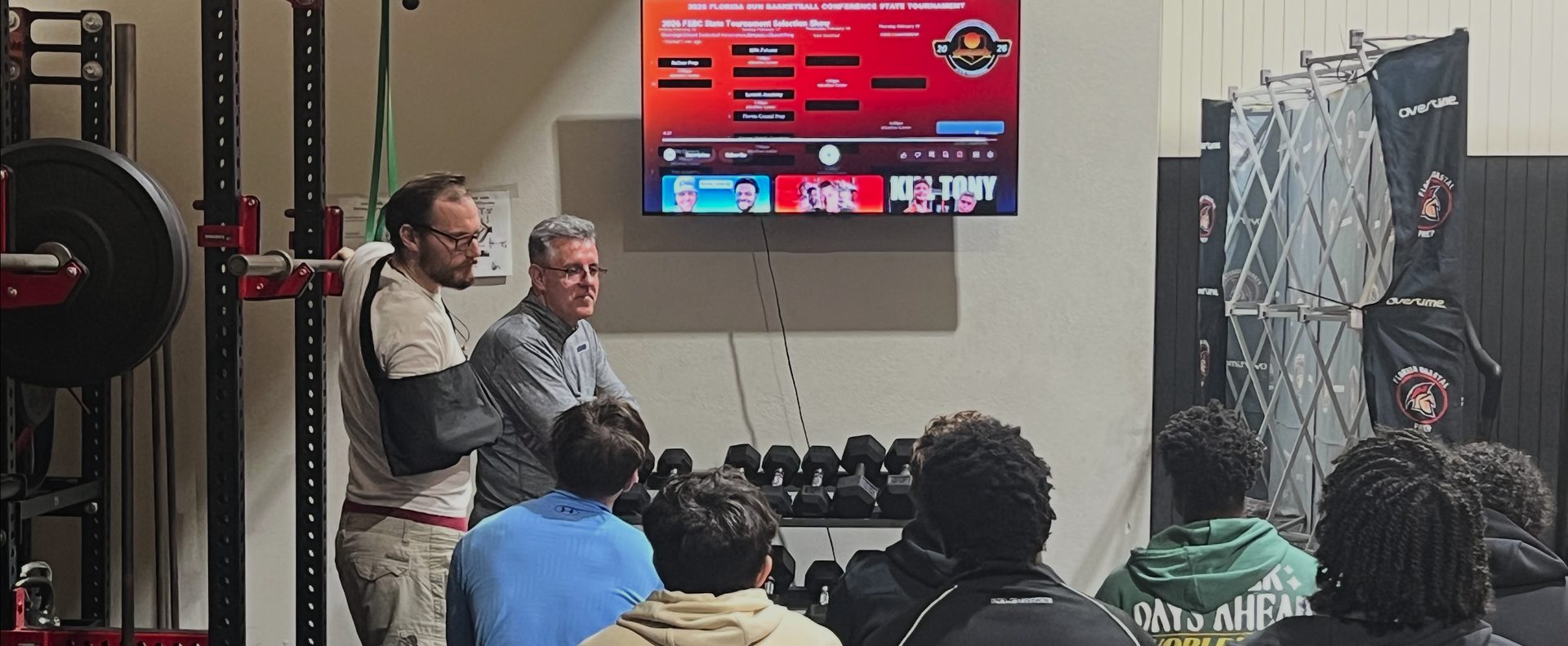
3. Film study
Athletes review their own possessions, not just team concepts. It is uncomfortable and it is the fastest teacher available. A player who can explain why he took a shot is a player a college coach will trust. See Film Study.
4. Competition
Drills prove nothing on their own. FCP teams play national prep programs and college opponents, and compete through the Grind Session, SEHAL, and SIAA. Recent opponents include Andrew College, DME Academy, Process Academy, Legacy Christian Academy, Middle Georgia Prep, and Innovation Academy. Full games are posted publicly on the FCP YouTube channel, which means the training is auditable by any college coach who wants to check it.
5. Recovery and environment
Meals, sleep, supervision, and structured downtime. This is the block families underrate. Two athletes can do identical workouts and get completely different results because one of them sleeps seven hours in a structured house and the other does not.
Who Runs The Training
- Kenny Anderson, Mentor and Leadership Trainer. Second overall pick in the 1991 NBA Draft, 14-year NBA career across nine teams, 1994 NBA All-Star, and a former head coach at Fisk University.
- Lee DeForest, National High School Director. Twenty-five years coaching across NCAA Division I, Division II, NAIA, and JUCO.
- Vando Becheli, National Post Grad Director and Director of Recruiting. Over 120 wins at Utah State University Eastern including a Region XVIII championship and a third-place NJCAA national finish, then 20-win seasons every year at Lighthouse Christian College.
The rest of the staff, including strength and skill development coaches, is on the coaches page.
Why Fort Walton Beach, Not South Florida
Most people searching for a basketball academy in Florida picture Miami or Bradenton. FCP is on the Emerald Coast in the Florida Panhandle, and that is deliberate.
- Year-round training weather. No lost months. Beach and outdoor conditioning work runs through the winter.
- Fewer distractions. A small coastal city with a military community around it is a very different environment from a major metro for a seventeen-year-old living away from home for the first time.
- Housing near the gym. Athletes live in team housing close to the facility rather than commuting across a city. See Housing.
Athletes from 43 states and 22 countries have trained at FCP since it opened in 2019, so the daily competition inside practice is national, not local.
What Actually Changes In The First 90 Days
Families ask what improvement looks like on a realistic timeline. Nobody can promise a specific number of inches on a vertical or points on an average. But the sequence is predictable, and knowing it keeps expectations honest.
- Weeks one to three: conditioning and habits. The first thing that changes is not skill, it is the ability to hold up. Most arriving athletes have never trained twice a day on a schedule. Sleep and nutrition get sorted out here or nothing else works.
- Weeks three to six: volume. Shooting reps go up sharply because the gym is available and the day has room for it. Shot mechanics start to hold under fatigue rather than falling apart in the fourth quarter.
- Weeks six to ten: decisions. Film study starts changing what a player does before he catches the ball. This is the least visible improvement and the one college coaches notice first.
- Weeks ten to thirteen: body. Strength work begins showing up in games. Holding position, finishing through contact, and staying in front defensively without fouling.
A player who arrives out of shape spends the first month buying back time. That is not a criticism, it is a reason to arrive ready. The athletes who get the most out of a training academy show up already able to complete the work, so the whole year is development instead of catch-up.
Who A Training Academy Is Not For
An honest program tells you when it is the wrong fit. A full-time basketball training academy is probably not right if any of these are true.
- The athlete is not the one who wants it. A player sent by a parent will not survive a 6:30 wake-up in February.
- The family needs a guaranteed scholarship outcome. No program can promise that, and the ones that do are the ones to walk away from.
- The athlete is thriving at his current school, playing real minutes, and already getting college contact. Do not fix what is working.
- Living away from home would create a problem bigger than the basketball problem you are trying to solve.
The right candidate is usually a player who is putting in real work, is not getting the reps, the coaching, or the exposure to match it, and is willing to live inside a schedule for a year to change that.
How To Choose A Training Academy In Florida
Before you commit a year of an athlete's life, get plain answers to these.
- Is the facility dedicated to basketball, or shared? What hours can athletes actually use it?
- How many athletes are on the roster, and how many are in a given practice group?
- Can I see a full game from last season right now, unedited?
- Who runs strength and conditioning, and how many days a week?
- How are academics scheduled, and who checks eligibility?
- Where did last year's players go, by name and school?
- Where do athletes live, who supervises the housing, and how far is it from the gym?
Keep Reading
Compare Spartan Training Center, Strength Training, Film Study, Individual Workouts, Basketball Academy Florida, and Basketball Academy For College Recruiting.
Compare Programs
How Does FCP Compare to Other Basketball Prep Programs?
- FCP vs IMG Academy
- FCP vs DME Academy
- FCP vs Montverde Academy
- FCP vs Oak Hill Academy
- FCP vs Prolific Prep
- FCP vs La Lumiere School
- FCP vs Brewster Academy
- FCP vs Sunrise Christian Academy
- FCP vs SPIRE Academy
- FCP vs Fork Union Military Academy
- FCP vs Combine Academy
- FCP vs Link Academy
- FCP vs Hargrave Military Academy
- FCP vs Putnam Science Academy
- FCP vs Blair Academy
- FCP vs Tarkanian Basketball Academy
- FCP vs Other Florida Prep Schools
- FCP vs IMG vs DME (3-Way Comparison)
See the full Florida basketball prep schools guide for a side-by-side look at every program.
Plan the Whole Recruiting Path
These guides connect the questions families ask before choosing a basketball academy: development, housing, cost, recruiting, and realistic college options.
Train Where Recruiting Is The Goal
FCP builds daily training around the film and habits college coaches actually evaluate.