Where are the best basketball camps in Florida? Day clinics, showcase circuits, and residency programs differ. This guide explains what actually moves recruiting.
Florida is the best state in the country for summer basketball development. The year-round climate, the density of recruiting circuits, and the concentration of serious programs mean a committed player can get more high-quality reps here between June and August than in most states combined. That’s not a marketing line, it’s why families relocate here, why college coaches cycle through multiple times each summer, and why Florida has produced a disproportionate share of Division I talent for decades.
But that same reputation creates noise. When you search “basketball camps in Florida,” you get everything from week-long skills clinics at a rec center to full-residency training programs built around the NCAA evaluation calendar. Not all of them will move the needle on recruiting. Some of them actively waste your summer if your goal is a college scholarship. Understanding the difference matters.
This is a guide to the different types of basketball camps in Florida, what college coaches actually evaluate in the summer, and what it looks like when a program is built specifically around that process.
On the Emerald Coast, see Kenny Anderson camps at FCP and FCP Sports youth basketball. Browse commitments and coaches.
The 4 Types of Basketball Camps in Florida
1. Day Camps and Skills Clinics
These are the most common and the most advertised. A player shows up for one to three days, works through drills with staff, and goes home. The best of them are legitimately useful for technical development, shooting mechanics, footwork, ball-handling in controlled settings.
Who they’re for: younger players (middle school, early high school) building foundational skills, or varsity players looking for a specific technical fix during the school year. If your son or daughter is 14 and needs to rebuild their shot form, a well-run three-day clinic is a reasonable investment.
Who they’re not for: juniors or seniors trying to get in front of college coaches. No college coach is making an evaluation decision based on a one-day clinic. The exposure element is essentially zero unless the clinic is hosted by or run in partnership with a specific college program.
FCP Sports, our Emerald Coast youth program, runs exactly this kind of development on the Florida Panhandle. Day camps and school-break camps at fcpsports.org/camps, year-round skills training at fcpsports.org/train, and youth leagues and tournaments at fcpsports.org/compete. That’s the right entry point for players who are still in the foundational years and aren’t yet on a college-recruiting timeline.
2. College ID Camps
These are hosted by individual college programs and designed to evaluate players for their specific roster. A D1 program runs an ID camp in June, 80 players show up, the coaching staff watches and takes notes on who they might eventually contact.
The honest truth about ID camps: they work, but they work best for targeted outreach. If your player has identified specific programs at the right academic and athletic level, attending their ID camp is one of the most direct ways to get on staff radar. The limitation is narrow focus, you’re auditioning for one program at a time.
What they don’t replace: being seen at sanctioned events by a wide range of coaches simultaneously.
3. AAU Team Programs
Travel ball in Florida runs from early spring through late July. The quality varies enormously. The best AAU programs are organized, tournament-selective, and run by people with real college placement networks. The worst collect fees and put players in front of nobody who matters.
What to evaluate in an AAU program: Does it compete in events with real NCAA evaluation windows? Is the coaching staff actively communicating with college coaches on behalf of players? Are players from the program getting real Division I, II, or III looks, and can they show you the placement history?
The Florida AAU market is large enough that there’s no reason to settle for a program that can’t answer those questions directly.
4. Full-Residency Development Programs
This is the most intensive category and the one that most directly mirrors the development model of top college programs. Players live on-site, train multiple times per day, compete in tournaments, watch film, and work with coaching staffs who are actively managing the recruiting process alongside their development.
Elite basketball camps in Florida built around this model give players the same structured week-over-week progression a college program provides, except the player is building their recruiting profile at the same time. These programs are expensive and selective. They are also the path most aligned with serious college placement.
What College Coaches Actually Want to See
Every June and July, college coaches are in the gym watching summer basketball in Florida. What they’re evaluating is not what most players think.
They are not primarily evaluating highlight plays. They are watching how a player plays when the ball is on the other side of the floor. They’re watching transitions, what the player does in the three seconds between when a shot goes up and when possession is determined. They’re watching communication on defense, how a player responds to a teammate’s mistake, and whether their conditioning holds up in the fourth game of the day.
The two critical NCAA evaluation windows in summer are mid-May and two windows in July, July 9–12 and July 16–19. Those are the dates when college coaches are allowed to watch prospects at sanctioned events. If a player is not competing in front of evaluators during those specific windows, the summer is largely wasted from a recruiting standpoint regardless of how much they trained.
This is the piece most families don’t understand until it’s too late. Training alone isn’t recruiting exposure. You have to be in the right place at the right time in front of the right people.
The Emerald Coast Circuit, Why the Florida Panhandle Is Underrated
Most people think of South Florida or Orlando when they think of elite summer basketball camps in Florida. The Panhandle gets overlooked.
That’s a mistake. The Gulf Coast circuit, Fort Walton Beach, Panama City, Destin, Pensacola, runs tournaments throughout May and July at a high level. Panama City, Mobile, Gulf Shores, Foley, and Birmingham are all within two hours of Fort Walton Beach. A player based here can compete in multiple meaningful tournaments per month without the logistical difficulty of navigating South Florida traffic and facilities.
The region also produces less noise. In South Florida, the density of programs means getting lost in the crowd is easy. On the Emerald Coast, a serious player stands out.
What FCP’s Summer Program Gives You That Most Camps Don’t
Florida Coastal Prep runs two summer sessions out of Fort Walton Beach: an Extended session from March through May covering 16 tournaments, and a Summer AAU session from June through July covering 7 tournaments. The NCAA live evaluation windows, May 16–17, July 9–12, and July 16–19, are specifically built into the schedule.
This is not incidental. The entire program is structured around getting players in front of evaluators during the windows when evaluations are actually permitted.
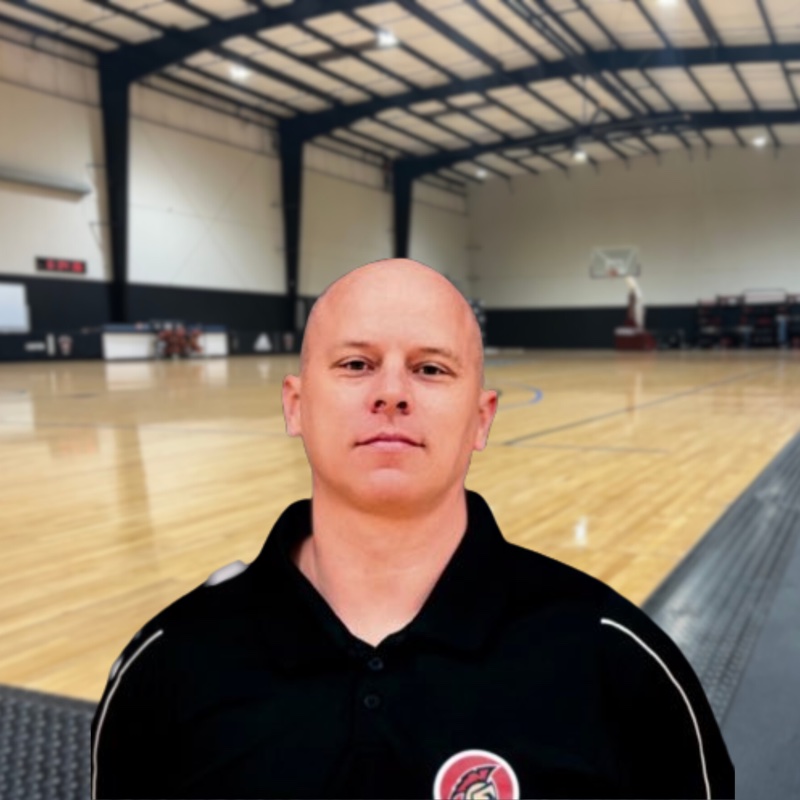
The facility is a 14,000 sq ft indoor Spartan Training Center with strength and conditioning running on a Westside Barbell protocol, the same powerlifting framework used by elite athletes. Film study is a regular part of the program, not an afterthought. Players compete in Adidas gear and uniforms.
The coaching staff is led by Kenny Anderson, who played 12 years in the NBA and was an All-Star, and Lee DeForest, who has 25 years of coaching experience. These are not summer camp counselors. They are coaches who have been in the environments these players are trying to get into.
Housing and meals are included, along with all tournament fees and uniforms. The all-in cost is $6,799 per six-week session. That’s a meaningful number, but it covers what most programs charge separately, and it means the player is focused entirely on basketball rather than logistics.
The results are what you’d expect from a program built this way. FCP alumni represent 43 states and 22 countries. Sean East II went from FCP to Missouri to the NBA G-League to the NBA. Nathan Mariano is a four-time NBB Champion playing in the Phoenix Suns organization.
Who Should Consider a Residency Program vs. a Camp
A one-week skills camp is the right call for a player who needs technical development in a specific area and isn’t yet at the point where recruiting exposure is the primary concern.
A residency program like FCP is the right call for a player who is ready, or close to ready, and needs structured competition, real coaching, and access to evaluators during the windows that matter. It’s also worth considering for players who finished their high school eligibility and are spending a post-grad year building their profile before college.
If the goal is a Division I offer, or even a strong Division II or III placement, the summer can’t just be training in isolation. It has to include the right competition, in the right settings, in front of the right people.
Florida provides that environment. The question is whether the program a player is part of is built to take advantage of it.
Which Path Is Right For Your Player?
Florida Coastal Prep runs two distinct pipelines for two distinct audiences. Match the player to the path, don’t pay for the wrong one.
For younger players (grades K–12) looking for local camps, training, or a team to play on:
- Summer & school-break camps at FCP Sports on the Emerald Coast, day camps and half-day formats for ages 7+
- Year-round skills training, private, small-group, and position-specific sessions with FCP Sports coaches
- Youth leagues and tournaments, organized league play and competition for kids who want real games, not just drills
FCP Sports is the right home for a 9-year-old who loves basketball, a 13-year-old ready to play competitively, or a high schooler sharpening skills during the school year. It’s community-scale, accessible, and built around development at the pre-recruiting level.
For varsity-age players (rising juniors, seniors, post-grads) targeting college scholarships:
- FCP Post-Graduate Program, a full-year residency for players who finished high school eligibility and need a bridge to college basketball
- FCP High School Program, national-schedule high school basketball for grades 9–12 with NCAA-approved academics
- Summer tournament program, 16–23 tournaments across the Extended and Summer AAU sessions, built around NCAA live evaluation windows
Both sides of the house are Fort Walton Beach, both use the Spartan Training Center, and they share the Adidas apparel and coaching DNA. But they’re built for different moments in a player’s career.
How to Find Out More
Ready to talk about where your player fits? The fastest paths:
- Parents of younger players (ages 7–14): fcpsports.org, browse camps, training, and leagues by age group
- High school and post-graduate families: contact our staff or start an application. Our coaches will walk you through whether the summer sessions, the high school program, or a full post-grad year is the right fit
- General questions about the Emerald Coast basketball scene: either site above works, and the FCP contact page is the shortest route to a direct conversation
The summer is short. The evaluation windows are specific. Make sure the program you’re in is built around them.