Can international players use an FCP post-grad year to reach NCAA D1? Yes, with development and exposure, but visa and eligibility rules are separate from basketball. F-1 students must enroll full-time in school. Our academic partner will issue the I-20 upon enrollment acceptance. FCP’s basketball program does not issue an I-20. See academic eligibility and why post-grad before you apply.
If you’re an international player, you already know the problem. You can hoop. You’ve put up numbers in your home country. But the American college coaches who hand out scholarships have never seen you play, can’t pronounce your high school, and have no idea whether your stats translate. The film exists. The exposure doesn’t.
That’s the wall. And it stops more talented international players than a lack of ability ever does.
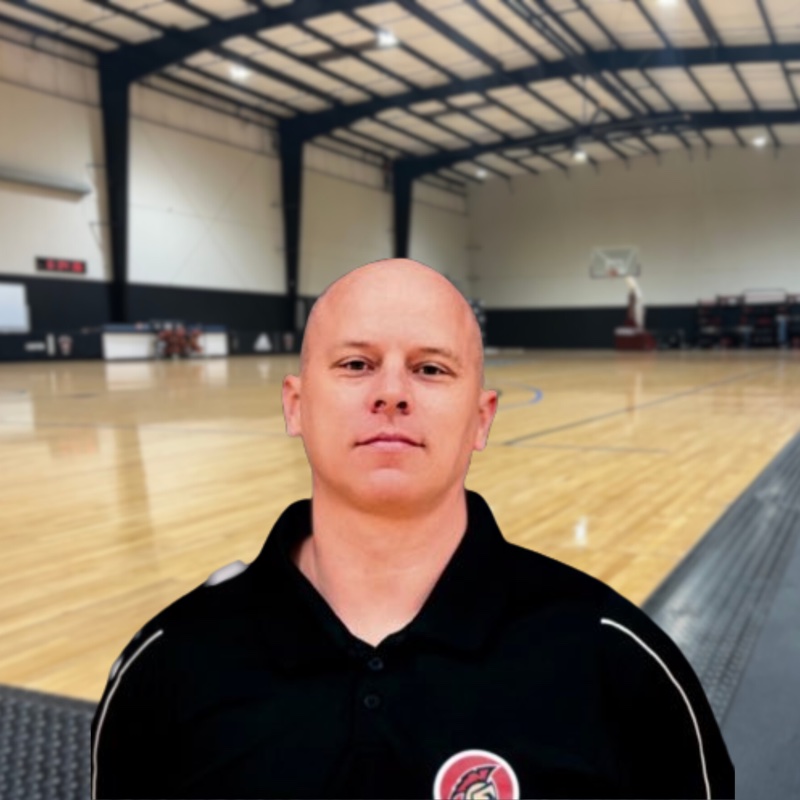
I’ve coached basketball for 25 years, and I’ve watched the international pipeline at Florida Coastal Prep grow from a trickle into one of the most reliable paths we run. Early examples such as Nadav Naim’s JUCO commitment show how a post-grad year can bridge military service, academics, and American recruiting. Players come to Fort Walton Beach from Brazil, Japan, South Sudan, and beyond, not because the beach is nice, but because a post-grad year here puts them directly in front of the people who decide their futures.
This isn’t a feel-good story. It’s a recruiting strategy. Here’s how it actually works, told through the players who lived it, including Nathan Mariano’s FCP-to-pro journey.
Why International Players Get Overlooked in the First Place
Let’s be honest about the disadvantage. An American kid in Texas or Florida plays in front of college coaches a dozen times a year without trying. AAU circuits, high school showcases, camps, the evaluators come to him.
An international player has none of that. His season runs on a different calendar. His league isn’t on any American coach’s radar. His highlight tape gets buried in an inbox next to 400 others. Even when he’s clearly D1-caliber, the system isn’t built to find him.
A post-grad year flips that. Instead of hoping a coach stumbles onto your film, you compete on American soil, on the Grind Session national circuit, against the same prep competition that D1 staffs are already scouting. You stop being invisible.
That single change, going from unseen to seen, is the entire game. Everything below is a variation on that theme.
1. The Japanese Guard Who Became Troy’s First
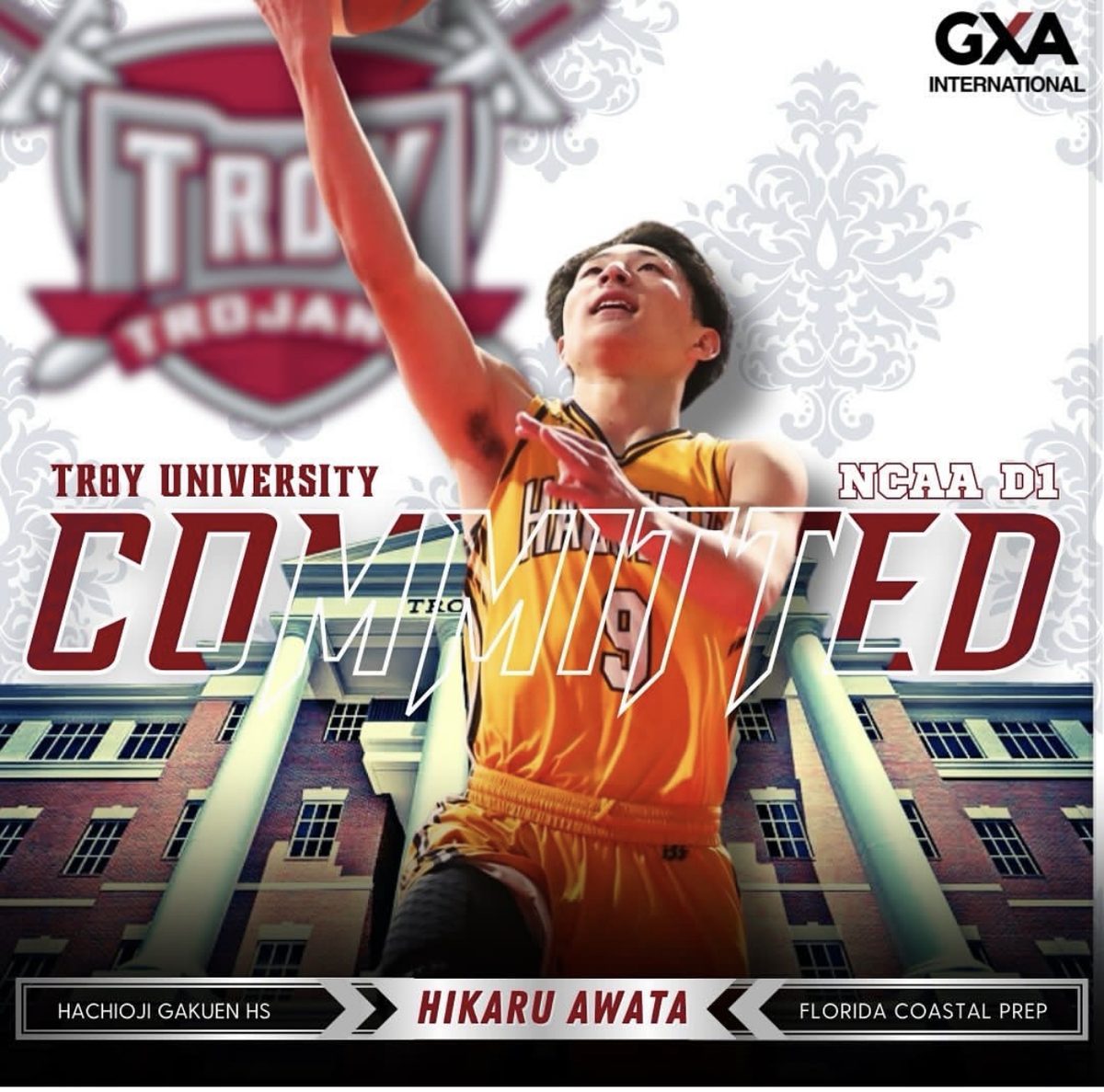
Start with Hikaru Awata’s Troy commitment, because his story shows exactly what’s possible.
Hikaru made the 7,000-mile jump from Hachioji, Japan to Fort Walton Beach for his FCP year. Think about what that takes. New country, new language, new style of play, the American game is faster, more physical, more isolation-heavy than what most Japanese guards grow up in. That’s a hard adjustment, and a lot of players don’t survive it.
He did more than survive. After a post-graduate season at Florida Coastal Prep and a stretch with GXA International, the explosive guard committed to Troy University in the Sun Belt Conference, one of the most competitive mid-major D1 leagues in the country. He became Troy’s first Japanese scholarship player in modern program history.
First. Ever. That word matters, because it tells you the Sun Belt wasn’t recruiting Japan. Nobody had a pipeline to Hachioji. Hikaru built that bridge himself by getting to a place where Sun Belt coaches were already watching, and then proving, in person, against American competition, that his game traveled.
That’s the model in one player. The talent was always there. The post-grad year supplied the missing piece: visibility plus proof.
2. The South Sudanese Forward Who Set a D1 Record
Ring Malith’s journey runs from Twic, South Sudan to an NCAA Tournament floor, and it’s one of the best stories in FCP history.
At 6’9” with guard skills, Ring had the kind of length and versatility every college coach wants. But raw length doesn’t equal a scholarship. At Florida Coastal Prep, he sharpened the all-around game that would define his career. From there he won an NJCAA National Championship at Barton CC, then landed his Division I opportunity at SIU-Edwardsville in the Ohio Valley Conference.
What he did at the D1 level is the proof of concept. He set a Division I single-game rebounding record at SIUE with 19 boards. He led the Ohio Valley Conference in scoring at 17.0 points per game as a senior, earned OVC All-Tournament honors, won two OVC Player of the Week awards, and helped lead SIUE to its first-ever NCAA Tournament appearance.
A player from a South Sudanese village led an American Division I conference in scoring. Let that sink in. The path from Twic to the NCAA Tournament didn’t exist until he walked it, and the post-grad year was the on-ramp.
3. The Brazilian Big Who Went Pro
Not every international story ends at D1. Some go further.
Nathan Mariano arrived at FCP from Franca, Brazil as a raw but physically gifted 6’9” forward. He competed daily in the Grind Session circuit, and that development laid the foundation for a professional career most players only dream about, four consecutive NBB championships with Sesi Franca, a Basketball Champions League Americas title, a FIBA AmeriCup gold medal with Brazil’s national team, and a contract with the Phoenix Suns organization.
Why include a pro in a D1 article? Because Nathan’s path proves the ceiling. When the development is real and the exposure is real, the post-grad year isn’t just a route to a scholarship, it’s a route to wherever your game can take you. Some guys cash that in as a D1 scholarship. A few, like Nathan, cash it in at the professional level.
The same engine drives both outcomes: serious daily development against high-level competition, in a place where the right people are watching.
4. The European Skill Player Looking for a Stage
Now we move from named alumni to the patterns I see year after year, because the international pool is wider than any three players.
The European prospect usually arrives more skilled and more fundamentally sound than his American peers. Footwork, passing, shooting mechanics, the European development system builds that early. What he often lacks is the athleticism arms race and the physicality of the American game.
A post-grad year is the perfect bridge. The skill is already there; the year adds the strength, the speed of decision-making, and, critically, the head-to-head reps against American athletes that let a coach project how the skill holds up at the D1 level. European bigs and wings who can shoot are exactly what mid-major and even high-major programs hunt for in the recruiting market.
The opportunity is real. The directory we maintain tracks where these fits exist, more on that below.
5. The African Length Nobody Has Developed Yet
Ring Malith is the headline, but he represents a much larger reality. The African continent produces length and athleticism at a rate no other region matches, and most of it goes underdeveloped because the infrastructure isn’t there.
A 6’9”, 6’10”, 7-foot frame with real mobility is a scholarship magnet, IF a coach can see a developed skill underneath the physical tools. That’s the gap a post-grad year closes. Raw shot-blocking and rebounding instinct become a usable offensive game. The motor gets harnessed into a system. And the player competes on American film against American bigs, which is the only evaluation D1 staffs fully trust.
The length is the gift. The development and the exposure are what turn it into a Division I commitment.
6. The Australian and Canadian Combo Guard
The English-speaking international markets, Australia and Canada chief among them, send a steady stream of combo guards into American basketball, and they tend to adapt fast. No language barrier, a basketball culture that already mirrors the American game, and a competitive junior system.
What these players usually need isn’t a translation; it’s a tier of exposure. They’re good enough for D1 but flying under the radar because their domestic results don’t show up in the databases American coaches scan. Drop that same guard onto the Grind Session circuit for a post-grad year, and suddenly his game lives in the same evaluation pool as every other D1 recruit.
For these players the post-grad year is less about transformation and more about placement, being in the room where the decisions get made.
7. The Player Who Almost Didn’t Bet on Himself
The seventh story isn’t a region. It’s a mindset, and it’s the one that decides everything.
Every international player who’s made this jump had a moment where the math looked insane. Leave your family. Cross an ocean. Spend a year and real money on a bet that American coaches will notice you this time. Hikaru’s 7,000 miles. Ring’s path out of South Sudan. Nathan leaving Brazil. None of that is comfortable, and plenty of talented players talk themselves out of it.
The ones who make it are the ones who bet on themselves anyway, who treat the post-grad year not as a gamble but as the most rational move available, because staying home guaranteed staying invisible.
That’s the player this program is built for. Not the one with the most talent. The one willing to put himself in position to be found.
What Actually Makes the FCP International Path Work
After watching dozens of international players come through, the pattern behind the successes is clear. It comes down to a few things working together.
Real daily development. Players train at the Spartan Training Center and compete on the Grind Session circuit against legitimate prep competition. This isn’t a holding pen for a year. The game gets better, measurably, which is the whole point, see what the training program actually involves.
Exposure to the right evaluators. The circuit puts players in front of D1 staffs as a feature, not a hope. Coaches see the film, see the live reps, and can finally project the international prospect with confidence.
Academic and eligibility navigation. International transcripts, NCAA Eligibility Center clearance, English-language requirements, this trips up more international players than basketball ever does. Handling it correctly is non-negotiable, and it’s part of what the program manages alongside full-time school enrollment. Our academic partner will issue the I-20 upon enrollment acceptance. FCP’s basketball program does not issue an I-20.
A culture built for the leap. Players who’ve crossed an ocean need an environment that takes the transition seriously. Housing, structure, a roster full of guys on the same mission. That’s what keeps an international player developing instead of drowning in homesickness and culture shock.
Miss any one of those, and the year underdelivers. Get all four right, and you get Hikaru, Ring, and Nathan.
Use the Directory to Find Your Fit
Here’s a practical step every international player and family should take before anything else: research where you actually fit.
We track nearly 2,000 college basketball programs in our college basketball programs directory, every division, every conference, filterable by state and level. International players, especially, benefit from knowing the landscape. Which conferences recruit length? Which mid-majors take chances on overseas guards? Where do international rosters already exist?
Don’t aim blind. Browse the directory, understand the levels, and build a target list. Then a post-grad year becomes a focused campaign instead of a hopeful broadcast.
If you want to see where FCP players have actually landed, the commitments page lays it out, the receipts on this pathway, including the international names above.
The Honest Bottom Line for International Players
The talent gap between international players and their American peers is mostly a myth. The exposure gap is real, and it’s brutal. That’s the whole problem, and the post-grad year is the most direct solution I know.
Hikaru Awata didn’t suddenly get better than every Sun Belt guard during his FCP year. He got seen, and he proved his game translated. Ring Malith didn’t grow three inches in Fort Walton Beach. He developed his skill and competed where it counted. Same engine, every time.
If you’re an international player with real ability and no clear path to American college basketball, the path isn’t more film sent into the void. It’s getting yourself to where the evaluators already are, with a year of serious development behind you.
Ready to Build Your Path to D1?
The international pipeline at Florida Coastal Prep is real, and the alumni prove it. But it starts with the decision to bet on yourself, to make the leap that staying home will never allow.
Research your options in the college basketball programs directory. Read why a post-grad year makes sense for players who need development and exposure. See Hikaru Awata’s Troy commitment and where our alumni landed on the commitments page and coaches page.
Then, if you’re serious about turning your game into an NCAA Division I scholarship, apply here. We evaluate international players year-round, and spots are limited. Don’t let the exposure gap decide your future when the path around it is right in front of you.